Equipment financing lets you buy the machinery, vehicles, or technology your business needs in 2026 without draining the cash you need for payroll and inventory — this guide walks through the exact steps to qualify and close a deal.
TL;DR
Getting equipment financing for your business starts with a vendor quote, not a lender application — lenders finance against an invoice, not an estimate.
Lenders approve equipment loans faster in 2026 when you submit 3-6 months of bank statements and tax returns up front.
Trifecta Business Group routes applications through bank and alternative-lender channels so thinner credit files still get equipment financing offers.
Skip any offer quoting a factor rate above 1.35 — a standard term loan almost always beats it on total cost.
Why this matters
Buying equipment outright ties up working capital you'll want for payroll, inventory, or the next slow month. Financing spreads the cost across the equipment's useful life instead of your bank balance, which is why most equipment purchases over $25,000 in 2026 get financed rather than paid in cash.
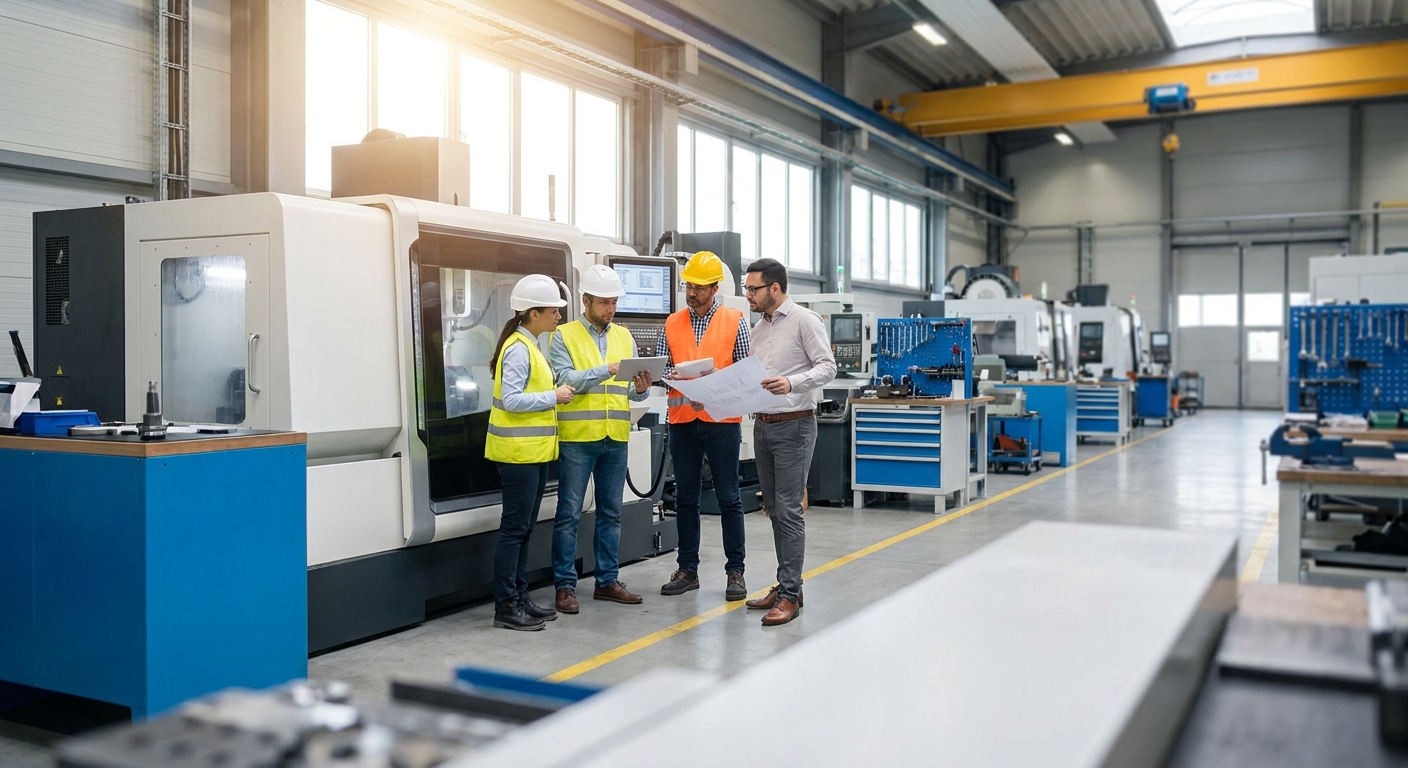
The process looks different depending on your industry. A manufacturer financing a CNC machine faces different collateral rules than a landscaper financing a truck — equipment financing for manufacturers often runs through equipment-specific lenders who value the asset itself as collateral. Get the structure wrong and you either overpay in interest or get stuck with a payment that outlives the machine.
What you'll need
A written vendor quote or invoice with make, model, and price
3-6 months of business bank statements
1-2 years of business tax returns (for loans over $150,000)
Personal and business credit reports
EIN, business license, and formation documents
A down payment or trade-in, if the lender requires one
Time in business of at least 12 months for the best rates
The steps
1. Get a vendor quote before you apply
A firm quote gives the lender exact equipment specs and price to underwrite against. Applying before you have one forces the loan officer to guess at terms, which slows everything down. Get the quote in writing with delivery timeline attached, then start the application within the vendor's price-hold window. Common mistake: applying with a rough estimate instead of an invoice — expect a counteroffer or a request to resubmit.
2. Pull your credit reports
Equipment lenders check both personal and business credit, and knowing your numbers before you apply tells you which tier of offers to expect. A personal FICO score above 650 generally puts you in prime pricing territory in 2026; below 600 pushes you toward asset-based lenders charging higher factor rates. Pull all three personal bureaus plus your business credit file and dispute any errors first. Common mistake: skipping the dispute step — a single reporting error can drop you a full pricing tier.
3. Gather your financial documents
A complete file moves through underwriting in days instead of weeks. Lenders financing amounts over $150,000 typically want 1-2 years of tax returns alongside 3-6 months of bank statements, a current P&L, and a balance sheet. Send everything together in one submission rather than trickling documents in as requested. Common mistake: sending partial statements — each missing document restarts part of the underwriting clock.
4. Decide between a loan, lease, or line
Match the financing structure to how long you'll actually use the equipment. A loan builds ownership and fits equipment with a long useful life; a lease keeps monthly payments lower for gear that will need replacing in 3-5 years; a line of credit covers smaller, recurring equipment needs better than a fixed-term loan. If your need is ongoing rather than a single purchase, compare this against how to qualify for a working capital loan before committing to a fixed term. Common mistake: financing a 3-year computer system on a 7-year term — you'll still be paying on obsolete equipment.
5. Compare offers on total cost, not monthly payment
Factor rates and APRs disguise true cost differently, so convert every offer to the same measure before deciding. Check origination fees and prepayment penalties too — a lower monthly payment on a longer term often costs more over the life of the loan. Common mistake: choosing the lowest monthly payment and ignoring that it comes with a term two years longer than the competing offer.
“If the factor rate tops 1.35, a term loan almost always beats it on total cost.”
6. Submit the application and respond fast during underwriting
Straightforward equipment financing files typically clear underwriting in 3-10 business days in 2026. Submit the signed application, vendor quote, and financials together, then respond to any underwriter request within 24 hours to keep the file moving. Common mistake: letting a document request sit for a few days — that delay can push you past the vendor's price-hold expiration.
7. Close and set up the payment structure
Read the final terms before signing, especially any balloon payment or lease buyout clause. A lease with a $1 buyout and one with a fair-market-value buyout at term end produce very different total costs, even with identical monthly payments. Confirm the autopay date lines up with your cash flow cycle before the equipment ships. Common mistake: not checking the buyout structure — it can add thousands to the true cost of a lease you thought was cheaper.
Troubleshooting
Approved amount is lower than the equipment price. Ask the vendor for a discount, add a down payment, or split the gap between an equipment loan and a working capital line.
Time in business is under 12 months. Apply with a lender that weighs owner credit and industry experience, or offset the risk with a larger down payment.
Credit score is under 600. Asset-based lenders still finance equipment using the machine itself as full collateral, but expect a higher factor rate.
Vendor won't hold the price. Ask for a 30-day rate lock in writing, or move to a lender with a faster close.
Lease vs. loan confusion at tax time. Section 179 deduction treatment differs between capital leases and operating leases in 2026 — confirm with your accountant before signing, not after.
Tools and resources
Written vendor quote with make, model, and delivery date
Free credit monitoring through your bank or a bureau site to check scores before applying
An APR calculator to normalize factor-rate offers for comparison
Equipment financing is usually one piece of a bigger funding plan, not the whole plan. If the equipment purchase is part of a larger growth push, look at how to get business funding to scale a small business next to see how it fits alongside working capital and marketing spend.
Ready to finance your equipment?
Trifecta Business Group matches you with lenders built for equipment purchases.
How do I get equipment financing for my business in 2026?
Get a vendor quote first, then apply with 3-6 months of bank statements and your credit reports ready. Straightforward files clear underwriting in 3-10 business days in 2026.
What credit score do I need for equipment financing?
A personal FICO score above 650 generally qualifies for prime pricing in 2026. Scores under 600 can still get approved through asset-based lenders, but expect a higher factor rate.
Is equipment financing better than a working capital loan?
Equipment financing fits a single, identifiable purchase with a long useful life; a working capital loan fits recurring or smaller equipment needs. Compare both structures before committing to a fixed term.
Can I get equipment financing with less than a year in business?
Yes, but expect a smaller approved amount or a request for a larger down payment. Some lenders weigh owner credit and industry experience more heavily when time in business is under 12 months.
What’s the difference between an equipment loan and a lease?
A loan builds ownership and suits equipment you’ll use for its full useful life. A lease lowers monthly payments but may end in a buyout clause that adds cost — read the fair-market-value versus $1 buyout terms before signing.
How much does equipment financing cost?
Cost varies by credit tier, equipment type, and lender, quoted as either an APR or a factor rate. Convert every offer to the same measure before comparing, since factor rates above 1.35 usually cost more than a standard term loan.
Do I need a down payment for equipment financing?
Not always, but a down payment can offset a lower approved amount or a thin credit file. Some lenders finance 100% of the equipment cost when the asset itself provides full collateral.
How long does equipment financing approval take?
Straightforward applications with complete documentation typically clear underwriting in 3-10 business days in 2026. Missing documents or slow responses to underwriter requests extend that timeline.
One last thing
The buyout clause on a lease matters more than the monthly payment printed on the offer sheet — a $1 buyout and a fair-market-value buyout can differ by thousands of dollars at the end of the same term, and that number rarely shows up until you ask for it directly.
Business funding for veteran-owned businesses in 2026: franchise, trucking, and construction funding compared, with a clear Buy or Skip verdict on each option.
Business consulting for nonprofit organizations in 2026: what to look for, top picks for funding and donor marketing, and what to avoid. Get the verdict.