Small business owners don't need more marketing ideas — they need to know which ones pay back fast enough to matter in 2026. This ranks seven strategies by cost, speed to results, and fit for lean budgets, with a clear verdict on each.
TL;DR
Email marketing and referral programs deliver the fastest, cheapest returns for small business growth in 2026 — buy both.
Local SEO and Google Business Profile work are the foundation; skip them and every other channel costs more.
Content marketing pays off in 2026 but takes 6-12 months — hold if you need cash flow now.
Paid search is the quickest way to generate leads but needs at least $1,500/month to work.
A full-service marketing partnership makes sense once you’re spread across more than two channels.
What the numbers say
$36 per $1
Average email marketing ROI
Litmus, 2023
42% more
Direction requests with GBP photos
Google data
6-12 months
Typical SEO payback window
Why this matters
Most small businesses don't fail at marketing because the ideas are bad. They fail because they spread a small budget across five channels instead of funding one or two properly. The best marketing strategies for small business growth in 2026 are the ones that match your cash position, not the ones with the flashiest case study.
Trifecta Business Group works with owners who need a marketing plan that ties directly to revenue, not vanity metrics. That means ranking channels by how fast they pay for themselves and how much budget they need before they work at all.
How this list is ranked
Each strategy below is scored on three things: cost to get started, time to see measurable results, and how well it fits a business running on a tight operating budget in 2026. This isn't a list of everything that exists — it's a short list of what actually moves revenue for companies under 50 employees.
The ranking leans on aggregated small-business marketing benchmarks and the patterns Trifecta Business Group sees across funding and marketing clients: which channels get renewed after 90 days, and which ones get quietly dropped.
The ranked list
1. Local SEO and Google Business Profile — the foundation everyone skips
A complete, active Google Business Profile with photos generates 42% more requests for directions than an incomplete one, according to Google's own published data. This is the cheapest channel on the list and the one that makes every other channel work harder, because paid traffic converts better when your local listing backs it up.
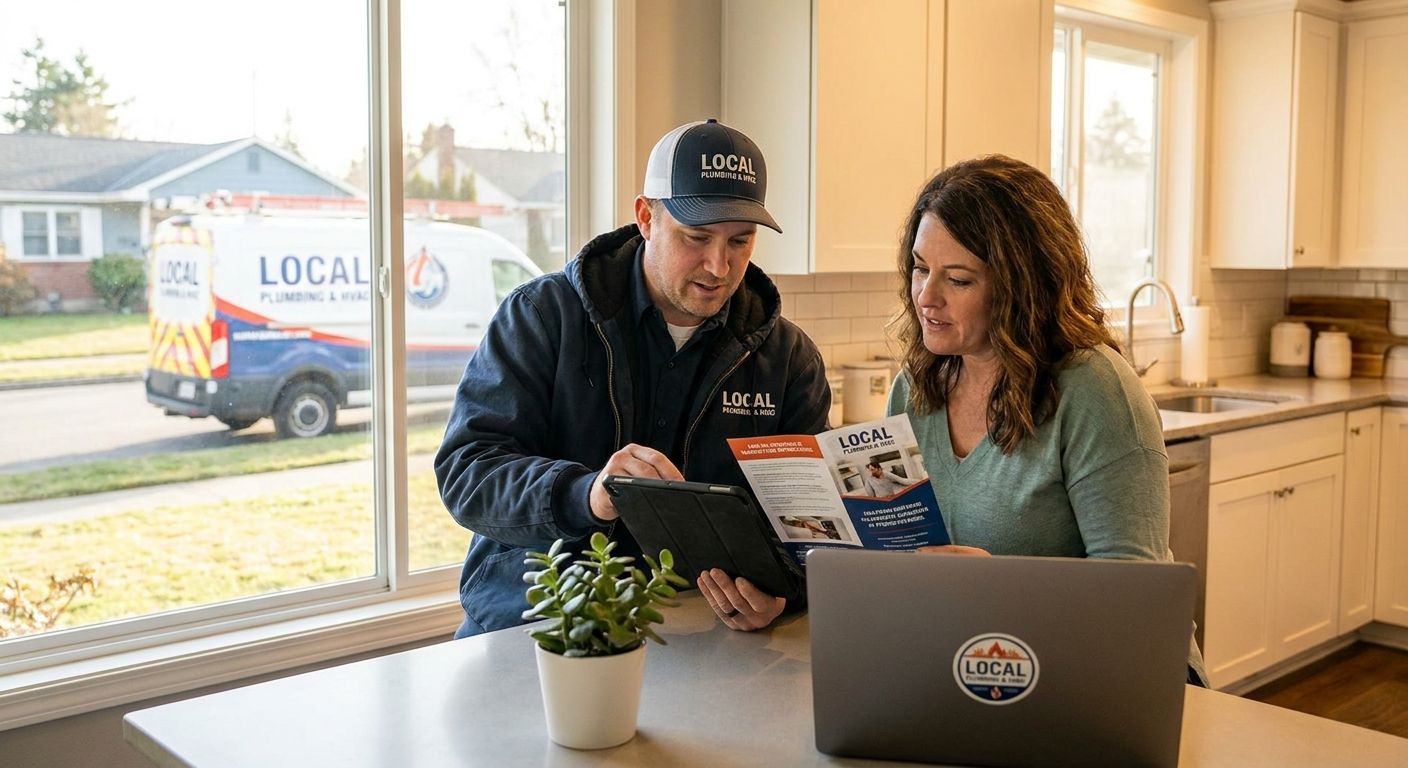
For service businesses that depend on local search — plumbers, contractors, salons — home services marketing built around local intent is the starting point, not an add-on. Verdict: Buy.
2. Paid search (Google Ads) — the fastest path to leads
Paid search puts you in front of buyers who are searching right now, and campaigns can start generating leads within days of launch. The catch is budget: under $1,500 a month, most small business accounts don't get enough data to optimize properly, and cost per click keeps climbing in competitive categories through 2026.
If you have the budget, this is the fastest way to test messaging and pricing before committing to slower channels. Verdict: Buy if you can fund it for 90 days straight; Consider below that.
3. Content marketing and SEO blogging — the compounding asset
Content marketing takes 6 to 12 months to show a real return, which makes it a hard sell for owners who need revenue this quarter. But once a page ranks, it keeps generating traffic without a recurring ad spend, which is exactly the kind of asset small businesses underinvest in.
This works best for businesses with 12+ months of runway to let it mature. Verdict: Hold if cash flow is tight; Buy if you're planning past 2026.
4. Email marketing and retention campaigns — the highest ROI nobody prioritizes
Email marketing returns an average of $36 for every $1 spent, based on Litmus's widely cited 2023 benchmark, and it costs almost nothing to run for a list under 5,000 contacts. Most small businesses build a list and then never message it beyond a monthly newsletter, leaving the highest-ROI channel on the list mostly idle.
A simple welcome sequence plus a monthly offer email outperforms most paid campaigns on cost per acquisition. Verdict: Buy.
5. Social media, organic and paid — the visibility play
Organic reach on most platforms has dropped for years, and 2026 is no exception — social works best as reinforcement for a buyer who already saw you somewhere else, not as a standalone lead engine. Paid social can work for consumer brands with strong visuals, but B2B service businesses tend to see weaker returns here than on search.
Treat this as brand-building, not a primary lead source, unless your product is highly visual. Verdict: Consider.
6. Referral and partnership programs — the cheapest acquisition you're not using
Referred customers show meaningfully higher retention than customers acquired through paid channels, a pattern Deloitte and other consumer research groups have documented repeatedly. A structured referral program costs little more than the incentive itself and taps a network you already paid to build.
This is the most underused channel on this list relative to how cheap it is to run. Verdict: Buy.
7. A managed marketing partnership — the shortcut for stretched owners
Once you're running three or more of the channels above, coordinating them in-house eats the hours an owner should spend running the business. Digital marketing services for small businesses built around funding-aware budgets solve the coordination problem, and B2B service marketing that ties campaigns to a sales pipeline works differently than consumer-facing social ever will.
This makes sense once your marketing complexity outpaces your internal bandwidth. Verdict: Buy for owners spread across more than two channels.
Comparison table
Strategy
Cost to start
Time to results
Best for
Verdict
Local SEO / GBP
Low
1-3 months
Local service businesses
Buy
Paid search
$1,500+/mo
Days to weeks
Fast lead generation
Buy
Content marketing
Low-medium
6-12 months
Long-term compounding traffic
Hold
Email marketing
Low
2-6 weeks
Retention and repeat sales
Buy
Social media
Low-medium
Ongoing
Brand visibility
Consider
Referral programs
Low
1-3 months
Cheap repeat acquisition
Buy
Managed partnership
Medium-high
30-90 days
Owners running 3+ channels
Buy
Where to start
Fund one channel fully before splitting budget. A half-funded paid search account and a half-funded content plan both underperform a single channel run properly.
Pair growth spend with a cash cushion. Marketing has a lag between spend and payoff — usually 30 to 90 days — and running out of working capital mid-campaign kills momentum right when it starts working.
Match the channel to the sales cycle. Fast-decision businesses lean on paid search and referrals; longer B2B cycles get more value from content and email nurture over 2026 and beyond.
Fund your 2026 marketing plan
Get working capital that covers the 60-90 day gap before campaigns pay off.
What are the best marketing strategies for small business growth in 2026?
Local SEO, email marketing, and referral programs top the list for cost and speed, with paid search close behind for businesses that can fund it consistently. Content marketing and a managed partnership round out the list for longer-term growth.
How much should a small business budget for marketing in 2026?
Budgets vary widely by industry, but paid search generally needs at least $1,500 a month to generate usable data. Lower-cost channels like email and referral programs can start producing results with almost no ad spend.
Is content marketing worth it for a small business?
Yes, but it takes 6 to 12 months to show a real return, so it works best for businesses with steady cash flow already covering short-term needs. Once a page ranks, it keeps producing traffic without ongoing ad spend.
What’s the fastest marketing strategy for new customers?
Paid search generates leads within days because it puts you in front of people actively searching for what you sell. Referral programs come in a close second since they tap an existing customer base.
How long does local SEO take to show results?
Most businesses see movement in Google Business Profile visibility within 1 to 3 months of optimizing photos, hours, and reviews. Full local pack ranking can take longer depending on competition.
Is email marketing still effective in 2026?
Yes — email marketing has historically returned around $36 for every $1 spent, per Litmus’s widely cited benchmark, and that gap over other channels hasn’t closed. It remains one of the cheapest channels to run for an existing customer list.
Should a small business hire an agency or handle marketing in-house?
Once you’re running three or more channels, coordinating them in-house usually costs more in owner time than a managed partnership costs in fees. Businesses running one or two simple channels can often handle it internally.
How does funding affect a small business marketing budget?
Marketing has a lag between spend and payoff, typically 30 to 90 days, and running out of working capital during that window stalls campaigns right before they start paying off. A funding cushion lets a business commit to a channel long enough to see if it works.
One last thing
The businesses that grow fastest in 2026 aren't the ones with the biggest marketing budget — they're the ones that fund one or two channels properly and let them run for a full quarter before judging results. Most small businesses quit a channel around week six, right before email sequences and local SEO typically start converting.
Small business marketing for home services companies in 2026: what to fund first, what to skip, and how to pay for a marketing push through the off-season.
How to qualify for a working capital loan in 2026: credit score, revenue benchmarks, required documents, and the fastest path from application to funding.
The best funding solutions for minority-owned businesses in 2026, ranked: SBA 8(a), CDFI loans, Community Advantage, and working capital. See the verdicts.
Accounts receivable financing for B2B companies in 2026: advance rates, recourse vs non-recourse, steps to qualify, and mistakes that slow down funding.