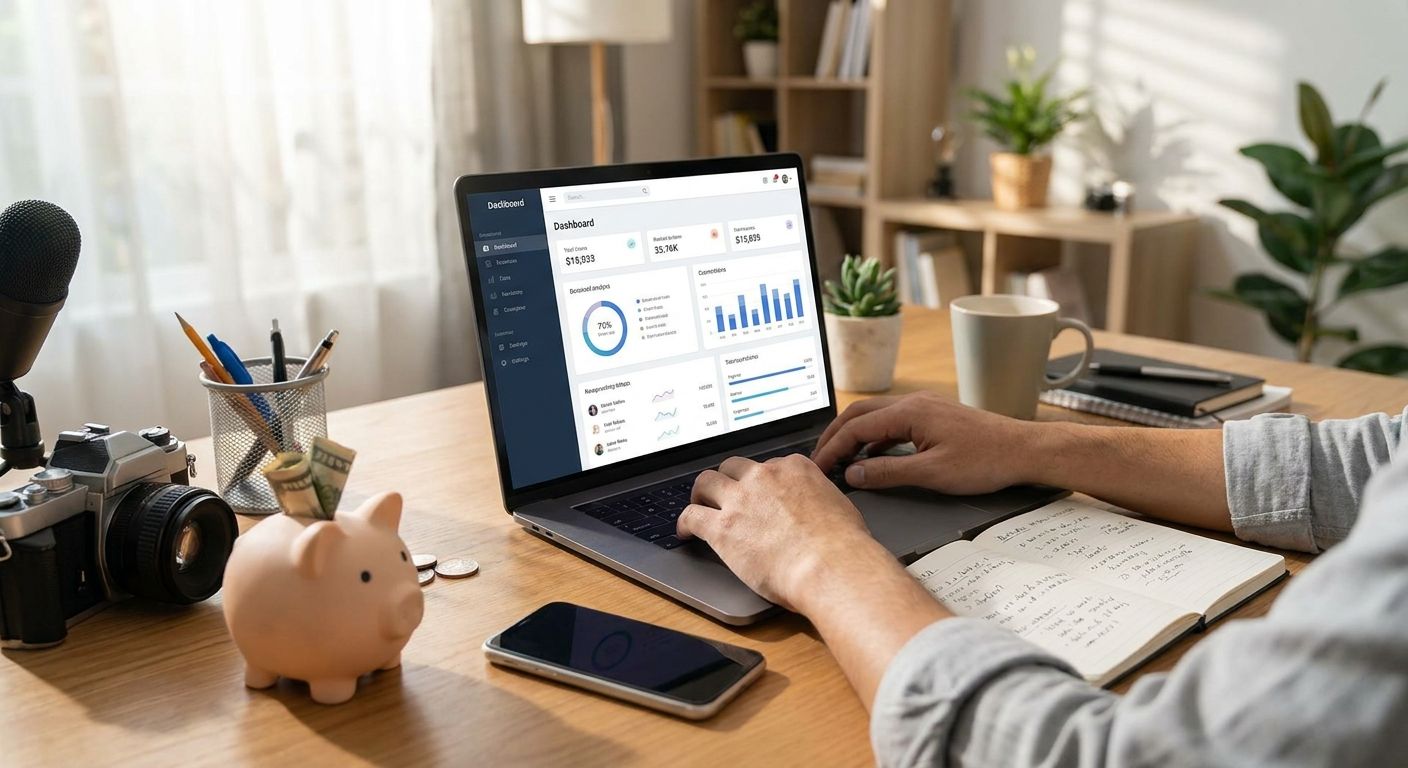
A digital marketing strategy for a small business in 2026 doesn't need five channels and a 40-page deck — it needs one goal, two channels, and a tracking system that tells you what's working inside 30 days.
TL;DR
How to build a digital marketing strategy for a small business in 2026 starts with one revenue goal, not five channels.
Two focused channels beat five scattered ones — track cost-per-lead before adding spend.
A written strategy takes 2-3 weeks to build and needs a review every 90 days in 2026.
Trifecta Business Group pairs marketing plans with funding runway so ad budgets don’t stall mid-quarter.
Quick numbers
7-8%
Typical marketing budget
share of revenue, SBA guidance
90 days
Strategy review cycle
2-3 weeks
Time to build a written plan
Why This Matters
Most small businesses don't fail at marketing because they picked the wrong platform. They fail because they never wrote the plan down, so every new tactic competes with the last one for the same shrinking budget.
A real digital marketing strategy for a small business forces one decision at a time: one goal, one buyer, two channels, one number to watch. That's the difference between marketing that compounds and marketing that resets every quarter. If you're still comparing vendors, the breakdown of digital marketing services for small businesses is worth reading before you sign anything in 2026.
What You'll Need
One 90-day revenue or lead goal, written as a number
A one-sentence description of your buyer (industry, size, problem)
A working website or landing page — even a single page is enough to start
A tracking setup (Google Analytics, a call-tracking number, or a CRM field for lead source)
A budget number, ideally 7-8% of gross revenue as a starting benchmark
A calendar blocked in 30-day test windows
The Steps
1. Set One 90-Day Revenue Goal
Skip "increase brand awareness." Write down a number: 20 new leads, $50,000 in new revenue, 15 booked calls. A vague goal produces a vague strategy, and a vague strategy is impossible to measure by the time 2026 wraps up.
Common mistake: setting a 12-month goal instead of a 90-day one. Markets move too fast in 2026 to plan a full year without a checkpoint.
2. Write Your Buyer Profile in One Sentence
Example: "Owners of 10-50 employee construction firms who need working capital within two weeks." One sentence forces clarity that a full persona document never does.
This single sentence decides your channels, your ad copy, and your landing page headline. Skip it and every later decision gets harder.
3. Pick Two Channels, Not Five
Most small businesses spread thin across five platforms and starve all of them. Pick two based on where your buyer already spends time — search and email for B2B, social and local search for consumer-facing shops.
The small business marketing strategies guide breaks down which channel mix fits which business type — use it to narrow your two before you spend a dollar.
Common mistake: adding a third channel in week two because the first two feel "slow." Give each channel 30 days minimum before judging it.
4. Build a Simple Funnel Before You Spend a Dollar
A funnel is three things: an offer, a landing page, and a next step (call, form, or booking link). Spend on ads with no funnel and you're paying to send strangers to a homepage that asks nothing of them.
Expected outcome: a visitor lands, sees one clear offer, and takes one clear action. Nothing else on the page matters yet.
5. Set Up Tracking Before Launch
Install analytics and a lead-source field before the first ad runs, not after. Without it, you'll spend 2026's budget guessing which channel actually produced the sale.
Common mistake: launching first and adding tracking "once it's live." By then the first two weeks of data are gone for good.
6. Budget as a Percentage of Revenue
The U.S. Small Business Administration's long-standing benchmark puts marketing spend at 7-8% of gross revenue for businesses under $5 million. Use that as your floor, not a ceiling — a business chasing aggressive growth in 2026 often runs higher.
Split the number 70/30: 70% to the channel with existing proof, 30% to the channel you're testing.
7. Run a 30-Day Test, Then Cut or Scale
At day 30, look at cost-per-lead and close rate, not impressions or likes. If cost-per-lead beats your target, scale the budget. If it doesn't, cut the channel and reallocate — don't tweak it for another 30 days out of sunk-cost habit.
Common mistake: judging a channel on vanity metrics (reach, followers) instead of the number tied to revenue.
Get a plan built for 2026
Talk through funding and marketing strategy with Trifecta Business Group.
Leads come in but won't close. The channel is working; the offer or follow-up isn't. Check response time first — a lead contacted within 5 minutes converts far better than one contacted a day later.
Cost-per-lead climbs every week. The audience is saturated or the creative is stale. Refresh ad copy every 2-3 weeks instead of running one version for 90 days.
Traffic is up, leads are flat. The funnel is broken, not the channel. Check the landing page offer before touching the ad spend.
No usable data after 30 days. Tracking was set up wrong or too late. Fix tracking before adding another dollar of spend.
Budget got approved but nothing shipped. Ownership is unclear. Assign one person to execution before the next planning meeting, not after.
Tools And Resources
Analytics platform (Google Analytics or equivalent) for lead-source tracking
A CRM or spreadsheet that tags every lead with its channel
Trifecta Business Group's consulting team for businesses that want the plan built rather than pieced together
What To Do Next
A strategy is only as good as the budget behind it. If your 2026 growth plan needs capital to fund the ad spend, staffing, or inventory that comes with scaling, the guide on funding to scale a small business walks through how Trifecta Business Group structures that funding alongside a marketing plan.
FAQ
What’s the best digital marketing strategy for a small business in 2026?
The best strategy sets one 90-day revenue goal, picks two channels based on where the buyer already spends time, and tracks cost-per-lead from day one. Businesses that add more channels before proving the first two rarely outperform ones that stay focused.
How much should a small business spend on digital marketing?
The U.S. Small Business Administration benchmarks marketing spend at 7-8% of gross revenue for businesses under $5 million. Businesses pushing aggressive growth in 2026 often budget higher, split roughly 70% to proven channels and 30% to testing.
How long does it take to build a digital marketing strategy?
A written strategy takes 2-3 weeks to build when the goal, buyer, and budget are already defined. Businesses starting from scratch, without a clear goal number, often take longer because that step gets skipped.
Is social media or SEO better for a small business in 2026?
It depends on the buyer, not the platform. B2B service businesses with longer sales cycles generally get more from search and email, while consumer-facing local businesses often see faster returns from social and local search.
Do I need a website before starting a digital marketing strategy?
Yes — even a single landing page with one clear offer works better than sending ad traffic to no destination. A funnel without a page to land on wastes the ad spend regardless of channel.
How often should I update my marketing strategy?
Review the plan every 90 days based on cost-per-lead and close rate data. Changing the plan every 30 days, before enough data exists, usually means cutting channels that were about to work.
Can a small business run digital marketing without an agency?
Yes, with a written plan, a tracking system, and someone accountable for weekly execution. Businesses that skip the tracking step tend to bring in outside help later anyway, after months of unmeasured spend.
What’s the biggest mistake small businesses make with digital marketing?
Running five channels with no tracking instead of two channels with clear cost-per-lead data. The fix isn’t more spend — it’s cutting the channels that aren’t proving out and doubling down on the one that is.
One Last Thing
The businesses that get the most out of a 2026 marketing plan aren't the ones with the biggest budget — they're the ones that gave one channel 90 full days before deciding it wasn't working. Most quit at day 20, right before the data would have told them to scale.
Compare term loans for small business expansion in 2026 — SBA caps, equipment financing, and franchise loans ranked with a clear buy-or-skip verdict for owners.
Startup business loans for entrepreneurs in 2026: compare SBA loans, lines of credit, and MCAs, plus the prep steps first-time founders skip before applying.
Merchant cash advance for small business explained: factor rates, holdback terms, and when to buy, consider, or skip it in 2026. Compare it against loans here.