

Business Funding · By Trifecta Business Group
Five business credit cards stand out for small business owners comparing rewards, spending flexibility, and credit-building power in 2026: Chase Ink Business Preferred wins for travel and bonus-category rewards, American Express Blue Business Cash is the pick for straightforward cash back, Capital One Spark Cash Plus suits businesses with high monthly spend and no preset limit, U.S. Bank Triple Cash Rewards Business covers everyday operating costs like gas and phone bills, and Bank of America Business Advantage Unlimited Cash Rewards is the low-maintenance, flat-rate option.
- Chase Ink Business Preferred is the best business credit card for small business owners who travel or spend heavily on advertising and shipping.
- American Express Blue Business Cash suits owners who want automatic cash back with no categories to track.
- Capital One Spark Cash Plus fits high-spend businesses that need room beyond a fixed credit limit.
- Not every card reports to business credit bureaus the same way, which matters more than the rewards rate.
- A credit card is a spending tool, not a funding strategy, once you need capital beyond the credit line.
Why this matters
A business credit card is often the first form of business credit an owner opens, and the wrong pick sets a habit that's hard to unwind. Rewards matter less than whether the card reports to a business credit bureau, whether it requires a personal guarantee, and whether the credit line will actually cover the spend you're putting on it.
Trifecta Business Group works with owners on exactly this overlap — where a credit card stops being enough and a real funding plan needs to take over. That's the lens behind this ranking: not just which card has the flashiest rewards, but which one fits how a small business actually operates in 2026.
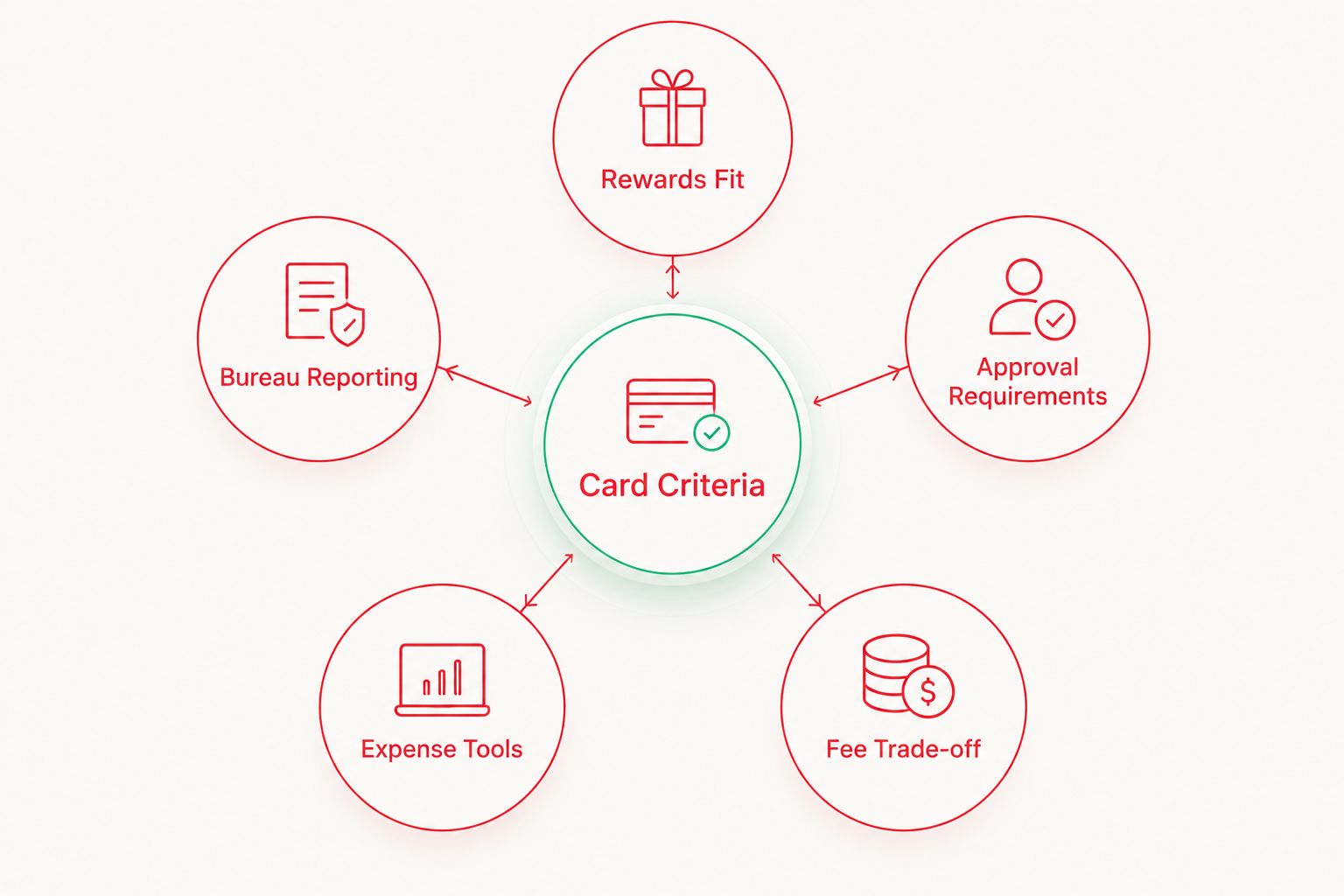
What makes the best business credit card for small business owners
- Rewards fit — bonus categories should match what the business already spends on, not what looks good in an ad.
- Bureau reporting — the card should report to a business credit bureau, not just the owner's personal file.
- Approval requirements — most cards still require a personal guarantee; know that going in.
- Expense tools — free employee cards, spend controls, and accounting integrations save time.
- Fee-to-value trade-off — an annual fee only makes sense if the rewards or perks clearly outweigh it.
At a glance: best business credit cards for small business owners 2026
| Card | Best for | Standout feature | Key limitation |
|---|---|---|---|
| Chase Ink Business Preferred | Travel and bonus-category spend | Points transfer to airline and hotel partners | Bonus categories reset annually and cap out |
| American Express Blue Business Cash | Simple, automatic cash back | Statement credit with no categories to track | Cash back rate flattens after the spending cap |
| Capital One Spark Cash Plus | High-spend businesses needing flexibility | No preset spending limit, based on payment history | Balance due in full each cycle, not revolving |
| U.S. Bank Triple Cash Rewards Business | Everyday operating costs | Bonus categories match common overhead spend | Bonus caps reset each cycle |
| Bank of America Business Advantage Unlimited Cash Rewards | Low-maintenance, flat-rate rewards | Flat cash back on every purchase, no tracking | No bonus boost for concentrated spend categories |
1. Chase Ink Business Preferred: best business credit card for travel and bonus spend
This card concentrates rewards in categories many small businesses already spend on — advertising, shipping, and travel booked through the issuer's portal. Points transfer to a list of airline and hotel partners, which matters if the owner travels for client work or conferences.
Chase Ink Business Preferred pros:
- Bonus rewards land in categories businesses actually use, not generic retail spend
- Points transfer to travel partners for outsized redemption value
- Purchase and travel protections built into the card
Chase Ink Business Preferred cons:
- Bonus category spend is capped and resets annually
- Full value depends on redeeming points for travel, not cash
- Carries an annual fee, so light spenders may not recoup it
Best for: owners who travel and spend heavily on advertising or shipping. Verdict: Buy if travel redemption fits how the business operates.
2. American Express Blue Business Cash: best business credit card for straightforward cash back
This card skips the points math entirely — cash back is applied as a statement credit with no enrollment and no categories to track. It also includes an expandable buying power feature for occasional larger purchases.
American Express Blue Business Cash pros:
- Cash back is automatic, no redemption steps
- Expandable buying power helps with occasional big purchases
- Reports to a business credit file
American Express Blue Business Cash cons:
- Cash back rate flattens once the annual spending cap is reached
- Fewer travel perks than a premium travel card
- Approval leans on a strong personal credit file
Best for: owners who want rewards without managing a points strategy. Verdict: Buy for simplicity-first owners.
3. Capital One Spark Cash Plus: best business credit card for high-spend flexibility
Structured as a charge card rather than a revolving line, Spark Cash Plus lets qualifying businesses spend beyond a fixed limit based on payment history. It pairs flat-rate cash back with no bonus categories to track, plus free employee cards.
Capital One Spark Cash Plus pros:
- No preset spending limit for qualifying accounts
- Flat-rate cash back with zero category tracking
- Employee cards at no added cost
Capital One Spark Cash Plus cons:
- Balance is due in full each billing cycle, not revolving
- Requires a personal guarantee and a stronger credit file
- Carries an annual fee
Best for: businesses whose monthly spend outgrows a standard credit limit. Verdict: Hold — strong fit only if the business can pay the full balance monthly.
4. U.S. Bank Triple Cash Rewards Business: best business credit card for everyday overhead
This card's bonus categories map directly onto recurring small business costs — gas stations, office supply stores, and phone or internet providers. No enrollment is needed to earn the bonus rate.
U.S. Bank Triple Cash Rewards Business pros:
- Bonus categories match common monthly overhead
- No enrollment required for bonus earning
- Reports to business credit bureaus
U.S. Bank Triple Cash Rewards Business cons:
- Bonus category spend is capped each cycle
- Fewer purchase protections than premium travel cards
- Approval favors owners with an established personal credit history
Best for: service businesses with predictable monthly overhead. Verdict: Buy if the bonus categories match actual spend.
5. Bank of America Business Advantage Unlimited Cash Rewards: best business credit card for low-maintenance rewards
This is the option for owners who don't want to manage a rewards system at all — a flat cash back rate on every purchase, no categories, no caps to watch. Owners with an existing Bank of America business banking relationship may qualify for a rewards boost.
Bank of America Business Advantage Unlimited Cash Rewards pros:
- Flat cash back on every purchase, no tracking required
- Existing banking relationship can boost the rewards tier
- Simple structure for owners who want to set it and forget it
Bank of America Business Advantage Unlimited Cash Rewards cons:
- No bonus boost for concentrated spend categories
- Rewards tier boost requires an existing banking relationship
- Fewer premium travel perks than dedicated travel cards
Best for: owners who want one flat rate and zero rewards management. Verdict: Buy for simplicity over optimization.
How we ranked these cards
Each card was measured against the five criteria above: rewards fit to real spend categories, bureau reporting behavior, approval requirements, expense management tools, and whether any annual fee is justified by the rewards or perks. None of the five duplicate each other's strongest use case — that's deliberate, because the right card depends on how the business spends, not which card has the biggest headline rate.
Which business credit card should you choose in 2026?
If spend is concentrated in travel, advertising, or shipping, Chase Ink Business Preferred is the default. If the priority is automatic cash back with zero category tracking, American Express Blue Business Cash or Bank of America Business Advantage Unlimited Cash Rewards both fit. If monthly spend regularly bumps against a credit limit, Capital One Spark Cash Plus solves that specific problem — as long as the business can clear the balance every cycle.
A credit card covers day-to-day spend. It does not replace a funding plan for equipment, payroll gaps, or growth capital — that's a different conversation, and one Trifecta Business Group has with small business owners regularly.
Need Funding Beyond A Credit Card?
Talk to Trifecta Business Group about funding built around your business, not just your credit line.
FAQ
What’s the best business credit card for a new LLC in 2026?
For a newly formed LLC with limited business credit history, American Express Blue Business Cash or Bank of America Business Advantage Unlimited Cash Rewards are easier to qualify for than premium travel cards. Approval still weighs the owner’s personal credit file heavily in the first year.
Is a business credit card better than a personal card for a small business?
Yes, a business credit card keeps expenses separate for tax and bookkeeping purposes and can build a business credit profile. A personal card mixes spend and reports only to the owner’s personal file.
Do business credit cards affect personal credit?
Most business cards require a personal guarantee, so missed payments or high utilization can show up on the owner’s personal credit report. Some issuers report routine activity to personal bureaus too, so check the issuer’s policy before applying.
How many business credit cards should a small business owner carry?
One or two is typical — one for everyday spend and one for a specific bonus category like travel or advertising. Carrying more than that adds complexity without adding meaningful rewards value.
Can I get a business credit card with no personal guarantee?
Most small business cards still require one, especially for newer or smaller companies. Cards without a personal guarantee typically require an established business credit history and higher revenue.
Do business credit cards report to Dun & Bradstreet?
Some do and some don’t, and this varies by issuer and card. Ask the issuer directly before applying if building a separate business credit profile is the goal.
What credit score do I need for a business credit card?
Approval generally favors owners with good to excellent personal credit, since most small business cards require a personal guarantee. Exact requirements vary by issuer and aren’t published as a fixed number.
Should I use a business credit card or apply for funding instead?
A credit card works for recurring, manageable expenses. Larger needs like equipment, payroll gaps, or expansion capital usually call for a dedicated funding solution rather than revolving credit.
One last thing
Not every card on this list reports to the major business credit bureaus the same way — some only touch the owner's personal file, which quietly defeats the point of building separate business credit. Ask the issuer directly before applying, and if the goal is a real funding strategy for 2026 and beyond, that's a conversation Trifecta Business Group has with small business owners every week.
What are you trying to fund?
Compare flexible working-capital options
Start with working capital and a line of credit, then compare payment structure and speed.
Compare options