

Business Funding · By Trifecta Business Group
Trifecta Business Group ranks as the best overall pick for wholesale distributors who want a funding strategy built around their business, not a one-size lender application. altLINE wins for bank-backed reliability. Riviera Finance wins for non-recourse protection. TCI Business Capital wins for high-volume distributors. Triumph Business Capital wins for wholesalers who also move their own freight. FundThrough wins for fast, fully digital turnaround.
- Trifecta Business Group is the top pick for invoice factoring for wholesale distributors in 2026 because it matches funding to the business instead of selling one product.
- altLINE, Riviera Finance, TCI Business Capital, Triumph Business Capital and FundThrough round out the field, each built for a different wholesale use case.
- Non-recourse factoring (Riviera Finance) shifts customer non-payment risk to the factor; recourse structures cost less but leave that risk with you.
- Most invoice factoring companies advance 80% to 90% of invoice face value upfront, with the remainder released once the customer pays.
- Digital-first platforms like FundThrough fund faster but flex less on complex wholesale invoicing like partial shipments or drop-ship terms.
Why this matters
Wholesale distributors sit in a cash trap that most other businesses don't face: you pay suppliers on 30-day terms, ship product, then wait 60 or 90 days for retail and B2B customers to pay their invoices. Payroll and reorders don't wait that long.
Invoice factoring closes that gap by selling unpaid invoices to a factoring company for an immediate cash advance, instead of taking on a loan. For a wholesaler carrying large receivable balances, the right factoring partner can be the difference between turning down a big reorder and filling it. Trifecta Business Group works with distributors to figure out which funding structure, including factoring, fits their receivables and growth stage before they sign with any single lender.
The wrong factoring partner locks a distributor into a contract structure that doesn't match how they invoice. Getting this pick right in 2026 means understanding what each factoring company actually does well before comparing rates.
How invoice factoring works for wholesale distributors
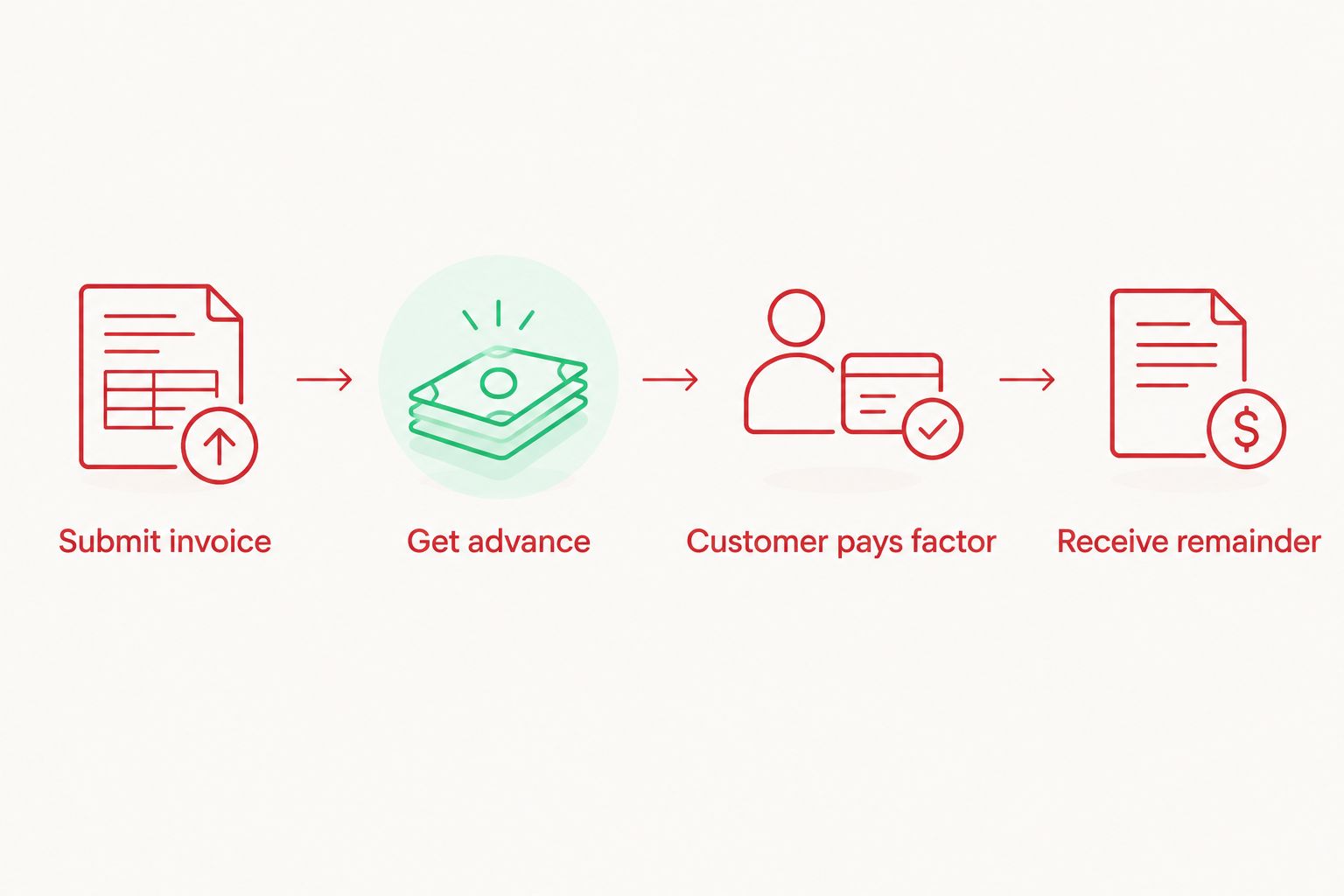
The mechanics stay consistent across every company on this list, only the terms and speed change.
- You submit outstanding invoices to the factoring company.
- The factor advances a percentage of the invoice value, typically 80% to 90%, usually within one to three business days.
- Your customer pays the invoice, often directly to the factor depending on the notification structure.
- The factor releases the remaining balance to you, minus its fee.
What makes the best invoice factoring company for wholesalers
- Advance rate on submitted invoices
- Recourse vs. non-recourse structure and who carries customer credit risk
- Funding speed from submission to cash in hand
- Industry fit for wholesale and distribution invoicing patterns, including partial shipments
- Contract flexibility, month-to-month vs. multi-year lock-in
- Account management style, dedicated rep vs. self-service dashboard
Invoice factoring companies for wholesalers at a glance
| Company | Best for | Standout feature | Key limitation |
|---|---|---|---|
| Trifecta Business Group | Wholesalers wanting matched funding + consulting | Funding strategy built around the business, not one product | Not a single-product factoring company; terms depend on the funding path matched to you |
| altLINE | Bank-backed reliability | Factoring division of an FDIC-insured bank | Bank underwriting can mean longer approval and stronger credit expectations |
| Riviera Finance | Non-recourse protection | Factor absorbs certain customer non-payment risk | Stricter approval on end-customer credit since the factor bears the risk |
| TCI Business Capital | High-volume distributors | Industry-specific underwriting teams | Onboarding paperwork runs longer than fully digital lenders |
| Triumph Business Capital | Wholesalers who also ship their own freight | Logistics-industry infrastructure alongside factoring | Freight-focused tooling is overhead if you don't move your own loads |
| FundThrough | Fast digital turnaround | Accounting software integration and online dashboard | Standardized digital underwriting flexes less on complex invoicing |
1. Trifecta Business Group: best invoice factoring path for wholesalers who want consulting support
Trifecta Business Group works with small and mid-sized wholesale distributors to map out funding solutions, including invoice factoring, against their actual receivables and growth plan, then pairs that funding with marketing and strategic consulting to help the business use the capital effectively.
Trifecta Business Group pros:
- Matches distributors to a funding structure instead of pushing one product
- Bundles funding guidance with marketing and operational consulting
- Works with businesses at different funding stages, not just strong-credit applicants
- Ongoing support after funding is in place, not a one-time transaction
Trifecta Business Group cons:
- Not a standalone factoring company, so distributors comparing raw factoring rates should book a consultation to see current structures
- Best fit for distributors who want strategy alongside capital, not a same-day online application
Best for: wholesale distributors who want the funding decision made with them, not just approved for them. Verdict: Buy.
2. altLINE: best for bank-backed reliability
altLINE is the invoice factoring division of The Southern Bank Company, which structures factoring as a bank product rather than a standalone finance shop.
altLINE pros:
- Bank affiliation adds institutional stability to the relationship
- Serves a wide range of industries, including wholesale and distribution
- Online portal for tracking submitted invoices and advances
altLINE cons:
- Bank-level underwriting can mean a longer approval process than non-bank factors
- Credit expectations lean stronger than some independent factoring companies
Best for: distributors who want a factoring partner backed by a chartered bank. Verdict: Buy.
3. Riviera Finance: best for non-recourse protection
Riviera Finance is a long-running non-recourse factoring company with branch offices handling account relationships directly, serving wholesale and distribution businesses among other industries.
Riviera Finance pros:
- Non-recourse structure shifts certain customer non-payment risk off your books
- Branch-based account managers instead of a purely digital relationship
- Established track record across multiple industries
Riviera Finance cons:
- Non-recourse protection means stricter approval on your end customers' credit
- Branch model means service can vary by location
Best for: distributors selling to customers with inconsistent payment histories who want the factor to carry that risk. Verdict: Buy.
4. TCI Business Capital: best for high-volume wholesale distributors
TCI Business Capital runs industry-specific underwriting teams and works with distributors moving significant invoice volume every month.
TCI Business Capital pros:
- Underwriting teams familiar with wholesale and distribution invoicing patterns
- Direct account management rather than a call center model
- Handles larger, recurring invoice volume well
TCI Business Capital cons:
- Onboarding documentation takes longer than app-based competitors
- Smaller or newer distributors may face more underwriting scrutiny
Best for: established wholesalers with high monthly invoice volume. Verdict: Buy.
5. Triumph Business Capital: best for wholesalers who also handle their own freight
Triumph Business Capital, part of Triumph Financial, built its infrastructure around freight and logistics factoring but also serves general wholesale accounts.
Triumph Business Capital pros:
- Logistics-industry tooling if you also invoice freight or transportation
- Established factoring infrastructure with broad industry reach
- Can handle mixed invoice types across product and freight
Triumph Business Capital cons:
- Freight-focused tooling is unnecessary overhead if you don't move your own loads
- General wholesale factoring can feel secondary to its transportation focus
Best for: wholesale distributors who also run their own delivery or freight operation. Verdict: Hold unless freight invoicing is part of your business.
6. FundThrough: best for fast digital turnaround
FundThrough runs invoice factoring as a fully digital platform, integrating with accounting software like QuickBooks so distributors submit invoices and get funding decisions online.
FundThrough pros:
- Fully digital application and funding process
- Direct integration with common accounting platforms
- Transparent online dashboard for tracking advances
FundThrough cons:
- Standardized digital underwriting flexes less on complex wholesale invoicing like partial shipments or drop-ship terms
- No branch-level relationship management
Best for: distributors with straightforward invoicing who want speed over hand-holding. Verdict: Buy for simple invoice structures.
How this list was ranked
Each company was weighed against the six criteria above: advance rate structure, recourse model, funding speed, wholesale industry fit, contract flexibility, and account management style. No company wins on every criterion — that's why the list is built as a decision tree by use case, not a single leaderboard.
Which invoice factoring company should you choose?
If you're unsure which funding structure fits your receivables, start with Trifecta Business Group to map the options before signing a factoring contract. If you already know you want non-recourse protection, go with Riviera Finance. If speed matters more than flexibility, FundThrough gets cash moving fastest. Distributors moving high volume with established credit should look at TCI Business Capital or altLINE first.
Compare your funding options
Talk through invoice factoring and other funding paths for your distribution business.
FAQ
What’s the best invoice factoring company for wholesale distributors in 2026?
Trifecta Business Group is the strongest overall pick for 2026 because it matches wholesale distributors to a funding structure instead of selling a single factoring product. Riviera Finance and FundThrough lead for specific needs like non-recourse protection or fast digital turnaround.
Is non-recourse factoring better than recourse factoring for wholesalers?
Non-recourse factoring shifts certain customer non-payment risk to the factor, which is safer if your customers have inconsistent payment histories. Recourse factoring usually costs less but leaves that risk on your books.
How fast does invoice factoring fund a wholesale distributor?
Most factoring companies advance funds within one to three business days of submitting an invoice. Digital-first platforms like FundThrough can move faster since underwriting happens online.
Do wholesalers need a broker or consultant to find a factoring company?
You don’t need one, but a consulting partner like Trifecta Business Group can shorten the search by matching your receivables and growth plan to the right lender before you sign a contract.
What’s the typical advance rate for invoice factoring?
Most invoice factoring companies advance 80% to 90% of an invoice’s face value upfront. The remaining balance, minus the factor’s fee, is released once your customer pays.
Can wholesale distributors use factoring alongside other funding types?
Yes. Distributors often pair factoring for near-term cash flow with a separate funding solution for equipment or expansion. Trifecta Business Group structures these combinations based on how a business invoices and grows.
Is invoice factoring better than a business line of credit for wholesalers?
Factoring converts receivables you already have into cash without adding debt, while a line of credit is a borrowing facility you draw against and repay. Distributors with slow-paying customers and thin credit history often lean toward factoring first.
Does invoice factoring affect customer relationships?
It can, depending on the notification structure. Some factors collect payment directly from your customer, so distributors sensitive to that should ask each company about non-notification options before signing.
One last thing
Invoice factoring doesn't show up on your books as debt because you're selling an asset, not borrowing against one. That single distinction is why distributors juggling supplier terms and customer payment lag reach for factoring before a loan in 2026 — it fixes the timing problem without adding a repayment schedule on top of it.
What are you trying to fund?
Compare flexible working-capital options
Start with working capital and a line of credit, then compare payment structure and speed.
Compare options