
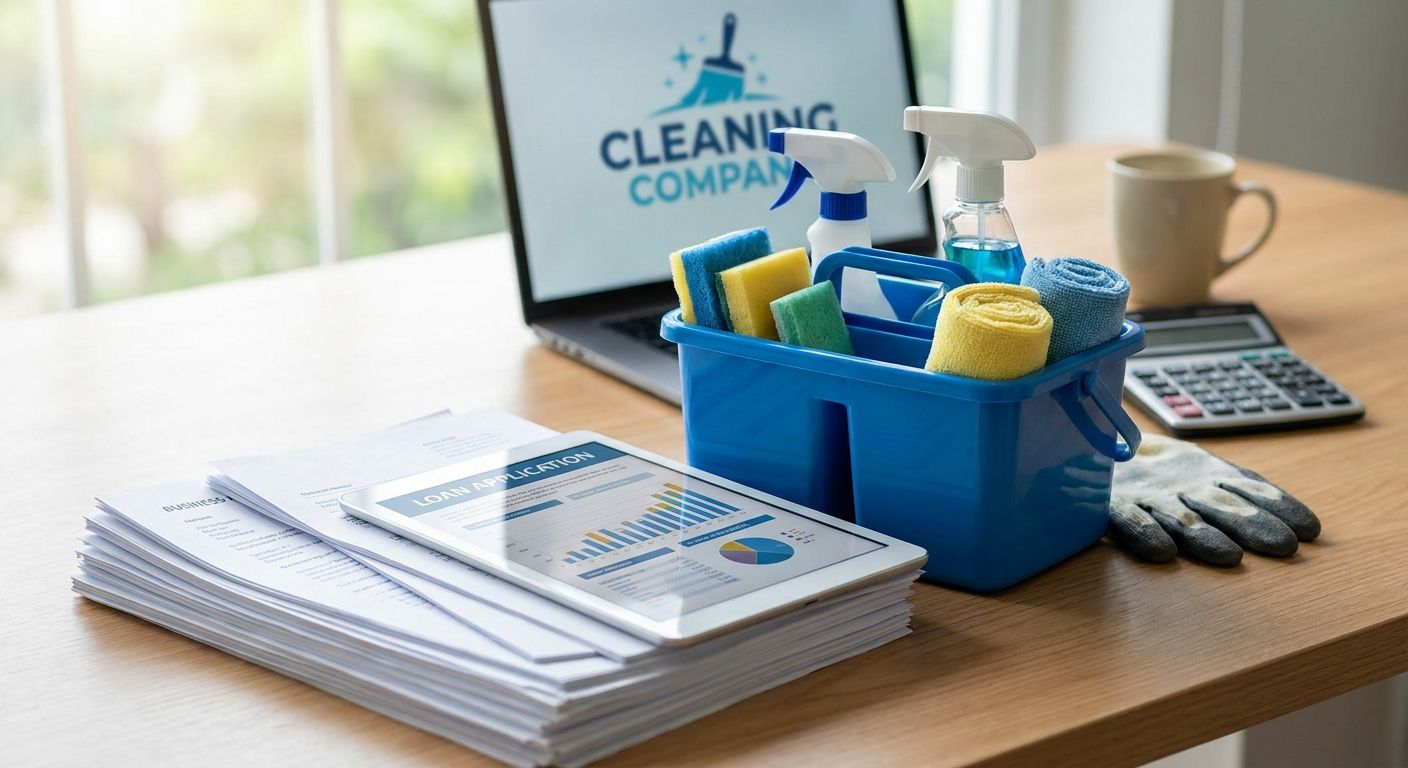
Business Funding · By Trifecta Business Group
Funding solutions for cleaning service businesses are financing products structured around the industry's cash flow pattern: heavy upfront costs for equipment and labor, slow-paying commercial contracts, and seasonal swings in residential demand. A commercial janitorial company billing net-30 has different funding needs than a residential cleaning franchise scaling routes across a metro area, and the right funding decision starts with knowing which gap you're actually closing.
- Funding solutions for cleaning businesses split into three lanes: equipment financing, working capital, and line-of-credit products for payroll gaps.
- Commercial cleaning contracts on net-30 or net-60 terms create the most common cash flow gap in 2026 — invoice factoring closes it fastest.
- Seasonal residential demand (spring cleanup, holiday turnover) makes working capital loans for seasonal businesses a better fit than a lump-sum term loan.
- Business line of credit for small business owners covers recurring payroll and supply costs without re-applying every time cash runs tight.
Why funding solutions matter for cleaning businesses
Cleaning businesses run on thin margins with front-loaded costs: crews get paid weekly, but commercial clients often pay on 30- to 60-day cycles. That mismatch is the single biggest reason cleaning companies stall out even while revenue climbs.
Equipment adds a second pressure point. A floor buffer, extraction machine, or a second van isn't optional once contract volume grows — it's the difference between taking the next job or turning it down. Funding that ignores this equipment cycle forces owners to either delay growth or drain payroll cash to buy gear outright.
Seasonality compounds both problems. Residential cleaning spikes around spring and the holidays; commercial janitorial demand is flatter but adds move-in/move-out surges tied to commercial leasing cycles. A funding structure built for a steady-revenue business doesn't fit either pattern well.
Map your actual cash flow gap
Before picking a product, quantify where the gap actually sits — payroll, AR timing, or equipment.
- Pull 90 days of bank statements and flag the weeks payroll ran tight
- List every commercial client's payment terms (net-15, net-30, net-60) side by side
- Separate one-time equipment costs from recurring operating costs
- Total the gap in dollars, not just "we're always tight" — lenders and you both need the number
Match funding type to revenue pattern
A cleaning business with steady commercial contracts qualifies for different products than one built on seasonal residential work.
- Commercial janitorial with recurring contracts: invoice-based financing tied to AR
- Residential with seasonal spikes: revolving credit that sits unused in slow months
- Franchise or multi-route operations: term financing sized to route expansion, not monthly cash gaps
- Mixed commercial/residential: a line of credit paired with equipment financing rather than one product covering both
The working capital loans for seasonal businesses page breaks down how repayment schedules should flex with revenue swings instead of demanding flat payments year-round.
Close the invoice-timing gap
If commercial clients pay net-30 or net-60, that gap is the most predictable funding need a cleaning business has — and the easiest to price correctly.
- Track average days-to-pay per client and flag chronic late payers
- Offer a small early-payment incentive to your best-paying commercial accounts before looking at outside financing
- Use invoice factoring only against verified, uncontested invoices — factoring companies decline disputed AR
- Size the facility to your largest single client concentration, not your average invoice
A structured facility against outstanding invoices turns a 45-day wait into next-day cash, which is the faster path once manual collections tactics stop closing the gap.
Cover equipment without draining payroll cash
Buying a floor machine or a second cleaning van out of operating cash is the single fastest way to create a payroll shortfall two weeks later.
- Get vendor quotes first — financing terms depend on equipment cost and expected useful life
- Match the loan term to the equipment's working life, not to your cash flow convenience
- Keep equipment debt separate from working capital debt on your books so you can track each obligation clearly
- Ask whether the lender reports payments to business credit bureaus — on-time equipment payments build credit for future funding
Details on structuring this properly sit on the equipment financing page, including how repayment terms should tie to the asset's expected life.
Build a revolving cushion for payroll weeks
Once the immediate gap is covered, a standing credit line prevents the next one from becoming an emergency.
- Apply for a line of credit before you need it — approval is faster and terms are better when the business isn't in a cash crunch
- Draw only what covers the specific payroll shortfall, then repay before the next cycle
- Keep the line separate from any equipment loan to avoid confusing debt obligations
- Review the line's terms annually as revenue grows — limits should scale with the business
The business line of credit for small business owners page covers how limits get set and what documentation speeds approval.
Prepare documentation before you apply
Cleaning businesses get declined more often for incomplete paperwork than for weak fundamentals.
- Gather 3-6 months of bank statements and your most recent tax return
- Pull a current AR aging report showing which commercial clients owe what
- Have your equipment list with purchase dates and remaining loan balances ready
- Write a one-page summary of what the funding covers and how it gets repaid
The how to prepare your business for a funding application page walks through the full document checklist lenders expect in 2026.
Comparing funding options for cleaning businesses
| Option | Best For | Speed to Fund | Key Limitation |
|---|---|---|---|
| Invoice factoring | Commercial janitorial with net-30/60 clients | Fastest | Only works against verified, uncontested invoices |
| Equipment financing | Buying vans, buffers, extraction machines | Moderate | Tied to the specific asset, not general cash needs |
| Business line of credit | Recurring payroll gaps, revolving cushion | Fast once approved | Requires an application before the cash crunch hits |
| Working capital loan (seasonal terms) | Residential businesses with spring/holiday spikes | Moderate | Flat-payment versions don't flex with slow months |
| SBA loan | Route expansion, multi-location growth | Slowest | Heavier documentation, longer underwriting |
The clearest verdict: a cleaning business chasing a net-30 commercial invoice gap gets funded faster and cheaper through invoice factoring than through a general working capital loan.
Common mistakes cleaning businesses make
- Financing equipment with a cash advance. Short-term, high-frequency repayment on a five-year asset creates a mismatch that strains weekly cash flow long after the equipment's already paid for itself.
- Ignoring client payment-term concentration. One large commercial account on net-60 terms can outweigh ten residential clients paying same-day — funding decisions should reflect where the actual cash is stuck.
- Applying for funding only after payroll is already short. Lines of credit and factoring facilities take time to set up; waiting until the crunch hits limits your options to the fastest, often costliest products.
- Mixing personal and business credit. Cleaning businesses that never separate the two struggle to qualify for better-priced products once revenue grows past the startup phase.
- Treating seasonal dips as a sign to cut funding entirely. A revolving line sized for slow months, not eliminated during them, keeps crews staffed through the gap instead of scrambling to rehire.
Get funding built for your cleaning business
Talk through equipment, payroll, or invoice-gap funding with Trifecta Business Group.
FAQ
What’s the best funding option for a cleaning business with slow-paying commercial clients?
Invoice factoring is the best fit when commercial clients pay on net-30 or net-60 terms because it converts the outstanding invoice into cash within days instead of waiting out the full payment cycle. It works best against verified, uncontested invoices rather than disputed AR.
Is a business line of credit better than a term loan for a cleaning company?
A line of credit is better for recurring payroll gaps because you draw only what’s needed and repay before the next cycle, while a term loan delivers a lump sum better suited to a one-time equipment purchase or expansion. Most cleaning businesses end up using both for different needs.
How much does equipment financing cost for a cleaning business in 2026?
Cost depends on the equipment’s price, useful life, and the borrower’s credit profile, and terms are set individually rather than published as a flat rate. Getting vendor quotes first and matching the loan term to the equipment’s working life keeps payments manageable.
Can a seasonal residential cleaning business qualify for working capital financing?
Yes — working capital products built for seasonal businesses flex repayment around revenue swings instead of demanding flat payments in slow months. This matters most for residential cleaning companies with spring and holiday demand spikes.
What documents does a cleaning business need to apply for funding?
Lenders typically want 3-6 months of bank statements, a recent tax return, an accounts receivable aging report, and a list of existing equipment with remaining balances. Having this ready before applying speeds approval significantly.
Should a cleaning business use a merchant cash advance to buy equipment?
No — a merchant cash advance is structured for short-term, high-frequency repayment and creates a cash flow mismatch against a five-year asset like a floor buffer or van. Equipment financing tied to the asset’s useful life is the better structural fit.
How do I build business credit as a cleaning company owner?
Keep business and personal credit fully separate, make on-time payments on any equipment or working capital financing, and confirm the lender reports to business credit bureaus. Consistent on-time payments over 12-24 months typically improve terms on future funding.
One last thing
The cleaning businesses that scale fastest in 2026 aren't the ones with the most funding — they're the ones who separate equipment debt from working capital debt on their books from day one, so growth in one area never quietly drains cash meant for payroll.
Related guides
- Working capital loans for seasonal businesses
- Equipment financing for your business
- Business line of credit for small business owners
- How to prepare your business for a funding application
- Small business marketing for home services companies
What are you trying to fund?
Compare flexible working-capital options
Start with working capital and a line of credit, then compare payment structure and speed.
Compare options