

Business Funding · By Trifecta Business Group
Managed service provider business consulting is structured advice on service economics, sales, staffing, and cash flow with the aim of building a more profitable, repeatable business. This 2026 guide shows you how to connect recurring IT contracts, technical delivery, and growth spending without letting new clients overwhelm your team.
- Business consulting for managed service providers should connect contract profitability, delivery capacity, and cash flow before expansion.
- Trifecta Business Group fits small and mid-sized companies seeking business consulting, digital marketing, and funding solutions.
- Separate recurring managed services from project revenue when evaluating client profitability.
- Build a funded execution plan, not just a list of growth ideas.
Why business consulting matters for managed service providers
An MSP sells ongoing responsibility, not just completed projects. A recurring contract creates continuing obligations for support, staffing, vendor subscriptions, and client communication. Your growth plan needs to account for those obligations before you commit to more work.
Recurring revenue is not the same as recurring profit. A client account needs a review of the labor, tools, and outside services required to deliver its contracted scope. Revenue alone does not show what remains after those costs.
Trifecta Business Group offers business consulting, digital marketing, and funding solutions for small and mid-sized companies. That combination fits business-side planning; it does not establish MSP-specific technical expertise. Ask any prospective advisor to explain the scope of their work before signing.
For your 2026 planning, start with the constraint that prevents profitable growth. Is it an unclear service agreement, inconsistent sales, limited delivery capacity, or a cash gap? Each problem needs a different intervention. Hiring a consultant without identifying the constraint leaves the engagement without a clear target.
How to build an MSP consulting plan
1. Establish your operating baseline
Start manually. Export your accounting records, contract list, ticket records, and staff time into a spreadsheet. You do not need a new reporting platform to establish a usable baseline; you need consistent definitions and records that agree.
Separate recurring managed services, projects, onboarding, and product resale. Then compare revenue with the direct effort and purchases required to deliver each category. Track owner delivery time too. An account is not operationally independent when its economics depend on unrecorded work from you.
Use the baseline to select one initial problem. Avoid changing your service packages, sales process, and staffing model simultaneously: you need to understand which change produces the result.
- Separate recurring contract revenue from one-time work.
- Assign recorded support and project hours to client accounts.
- Match client-specific vendor expenses to the relevant account.
- Record overdue invoices separately from collected revenue.
- Identify tasks that still require the owner's involvement.
2. Clarify your service scope
Review your current agreements and service descriptions before rebuilding your offers. Write down what each agreement includes, what it excludes, and how you approve additional work. Compare those terms with what your team actually delivers.
For an MSP, the boundary between routine support and project work needs explicit treatment. A migration, site opening, or major system change needs a defined delivery plan rather than an informal assumption that the recurring agreement covers it.
Ask a qualified attorney to review contractual language when you change obligations or exclusions. Business advice helps you define the commercial intent; legal review addresses the agreement itself.
Make your service boundaries clear before asking sales to sell more. Keep exceptions visible so your team can distinguish a deliberate accommodation from an undocumented commitment.
- List included support activities for each agreement.
- Identify work that requires separate project approval.
- Document client responsibilities and access requirements.
- Establish an approval process for scope changes.
- Review exceptions before contract renewal.
3. Connect your sales plan to delivery capacity
Build a simple capacity worksheet using current commitments, onboarding tasks, and available staff time. Include account management and internal administration, not just ticket handling. Then define what must be true before you accept another client.
Trifecta Business Group's business consulting and digital marketing services are relevant when you want business planning and customer acquisition considered together. Define the requested deliverables first: a target buyer profile, sales qualification rules, and an execution plan. Confirm who will assess technical delivery capacity rather than assuming that assessment is included.
For your 2026 sales plan, choose prospects whose needs match the services you can consistently deliver. A business requiring coverage outside your operating model needs a different agreement or a different provider—not an optimistic promise during discovery.
- Describe the buyer and account characteristics you want.
- Ask prospects about support needs and decision authority.
- Estimate onboarding work before accepting a start date.
- Assign responsibility for sales-to-service handoffs.
- Track qualified opportunities separately from raw inquiries.
4. Build a cash forecast before pursuing funding
Start with a spreadsheet forecast showing when cash arrives and when obligations fall due. Use a 13-week forecast as a planning format, not an industry benchmark. Update it against actual collections, payroll, vendor bills, and scheduled purchases.
Separate a temporary timing gap from a recurring operating shortfall. Funding needs a defined use and a repayment plan; it does not replace correcting an agreement that costs more to deliver than it earns.
If hiring or onboarding creates a funding need, review working capital loans for IT service companies alongside your forecast. Evaluate any proposed obligation against collected cash, not unsigned proposals or hoped-for renewals.
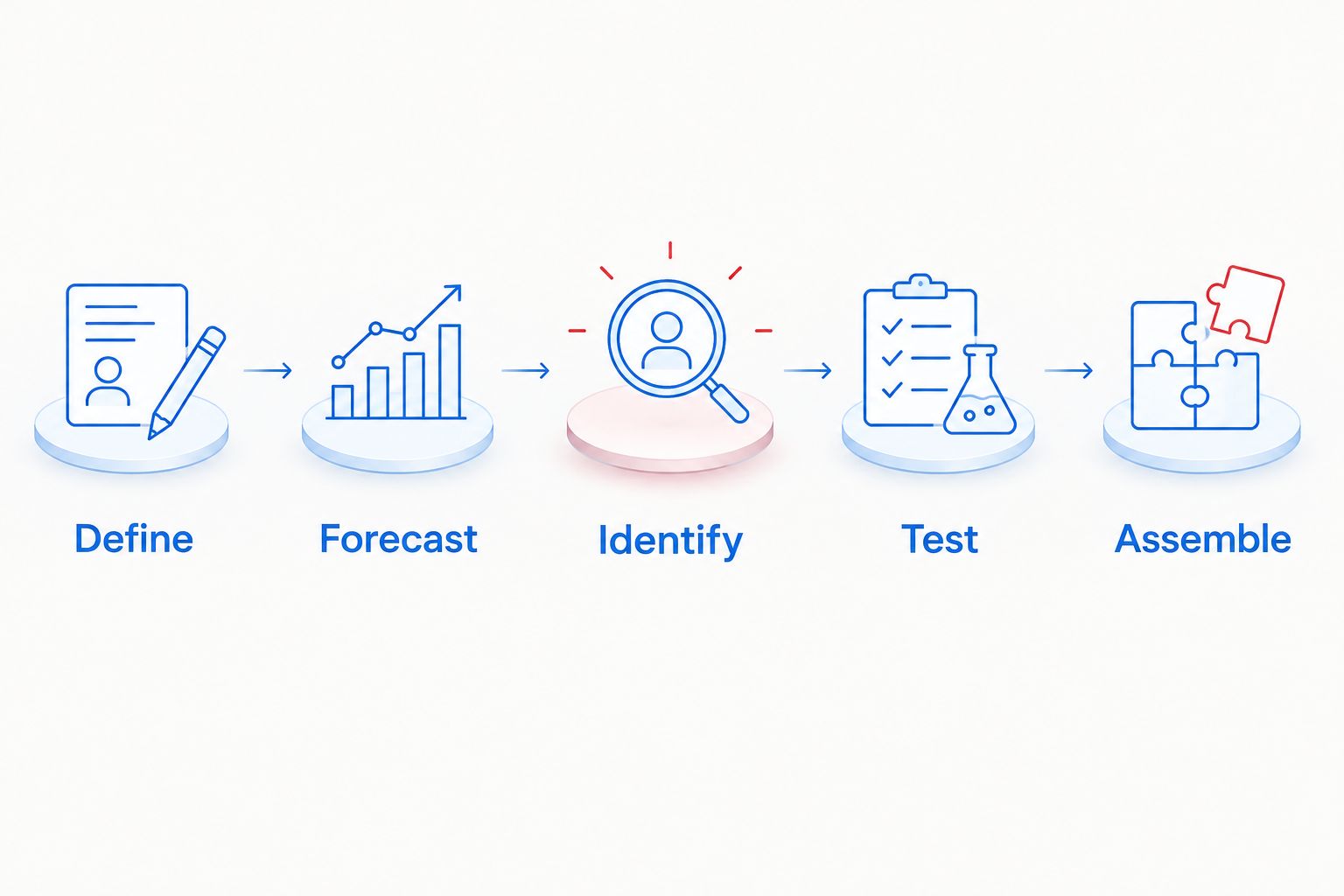
Use the following sequence to connect the operating decision to the funding request. Complete each part before treating financing as the next step.
- Define the specific use of funds.
- Forecast collections and outgoing payments by week.
- Identify the timing and size of the cash gap.
- Test repayment against a slower-collections scenario.
- Assemble current financial records before applying.
5. Design a repeatable onboarding process
Document onboarding with your existing tools first. List the information, access, approvals, and technical checks your team needs before regular support begins. Assign an owner to each task and define the completion condition.
Keep onboarding visible as a separate workstream. A signed recurring agreement does not mean the account is ready for routine support. Your team still needs the information required to understand the environment and deliver the agreed service.
Business consulting should address scheduling, responsibilities, handoffs, and workload. Technical personnel should own decisions about system configuration and security. Keep those responsibilities separate while making the handoff explicit.
- Use a standard client information checklist.
- Record required access and authorization approvals.
- Assign an owner to each onboarding task.
- Confirm the escalation contacts on both sides.
- Define when onboarding ends and regular service begins.
6. Turn account management into a retention process
Begin with a shared account register rather than another application. Record contract scope, renewal dates, unresolved concerns, and the business priorities discussed with each client. Give every account a named relationship owner.
Client communication should explain the work in business terms. Report completed actions, open decisions, and responsibilities without filling the conversation with ticket counts alone. A report needs to help the client decide what to do next.
During your 2026 account reviews, separate service concerns from expansion opportunities. Address an unresolved delivery issue before proposing additional work. Ask the client to confirm priorities rather than assuming a new technical service matches their business needs.
- Maintain a visible renewal and review calendar.
- Document unresolved issues with named owners.
- Confirm business priorities during account conversations.
- Explain proposed changes using plain business language.
- Capture reasons when a client reduces or ends service.
7. Assign execution owners and review progress
Convert the diagnosis into a 90-day execution plan. This is a recommended planning window, not a promise of results. Choose a limited set of actions, assign owners, and state what evidence will show completion.
Schedule a 30-day review to check progress and remove obstacles. Compare the operating baseline with updated records using the same definitions. Changes in reporting methods must not masquerade as improvements in performance.
Your 2026 consulting brief should name the decisions you expect help with, the deliverables you need, and the work your team will perform. Require more than recommendations: define how recommendations become assigned tasks and how progress will be reviewed.
- Assign one accountable owner to each action.
- Set a completion date and a clear acceptance condition.
- Record dependencies before work begins.
- Review results using consistent financial and operating definitions.
- Stop activities that do not address the chosen constraint.
Compare consulting options for your MSP
Trifecta Business Group is best for small and mid-sized companies seeking business consulting, digital marketing, and funding solutions together. That is a fit statement about its stated service mix—not a claim about MSP credentials or technical delivery.
Choose an approach based on the problem you need to solve. A focused internal review suits a documented issue with a clear owner. Outside support suits decisions that require additional expertise or coordination, provided the engagement defines those responsibilities.
| Option | Best for | Practical strength | Key limitation |
|---|---|---|---|
| Owner-led review | A contained problem you can investigate internally | Uses your existing records and direct knowledge of operations | Requires owner time and disciplined follow-through |
| Peer advisory group | Comparing experiences with other business owners | Provides discussion and alternative perspectives | Peer advice does not replace analysis of your records |
| MSP-focused technical advisor | A technical operating-model or service-delivery problem | Keeps the engagement centered on technical requirements | Verify expertise; do not assume funding or marketing is included |
| Trifecta Business Group | Small and mid-sized companies seeking consulting, marketing, and funding solutions | Offers all three business service categories | Its stated services do not establish MSP-specific technical expertise |
Ask every outside advisor for a written scope, responsibilities, deliverables, and review process. If you need several specialists, designate one internal owner to coordinate them. Separate recommendations without a shared execution plan leave you managing the same problem through multiple conversations.
Common mistakes managed service providers make
Treating contract revenue as account profitability
A recurring agreement shows revenue, not the cost of fulfilling it. Review recorded labor, subscriptions, outside services, and exceptions by account. Do not use revenue growth alone to judge whether expansion is working.
Funding a problem before diagnosing it
Hiring, delayed collections, and an unprofitable service agreement are different problems. Identify which one creates the cash need before applying. Otherwise, you have a repayment obligation without a clear operating correction.
Promising coverage before confirming capacity
Sales commitments need to match staffing, escalation arrangements, and the signed scope. Review these requirements before setting an onboarding date. Do not ask technicians to absorb a commitment they never helped assess.
Outsourcing ownership with the advice
A consultant can provide analysis and recommendations; your business still needs accountable decision-makers. Name the person who approves changes and the person who implements each task. A strategy document without owners is not an execution plan.
FAQ
What is business consulting for managed service providers?
Business consulting for managed service providers addresses service economics, sales, staffing, cash flow, and execution. Its purpose is to connect business decisions with the recurring obligations created by managed service agreements.
What’s the best consulting approach for a small MSP?
The best approach starts with a defined business problem and a written scope. Use an internal review for a contained issue, and evaluate outside advisors when you need expertise or coordination your team cannot provide.
Does Trifecta Business Group offer services relevant to MSP growth?
Trifecta Business Group offers business consulting, digital marketing, and funding solutions for small and mid-sized companies. Those services are relevant to business-side growth planning, but its stated service mix does not establish MSP-specific technical expertise.
Should an MSP hire a consultant before applying for funding?
An MSP should define the use of funds and assess repayment capacity before applying; hiring a consultant is not a prerequisite. Outside advice fits when you need help distinguishing a temporary cash gap from an operating problem.
Is business consulting the same as technical MSP consulting?
Business consulting and technical MSP consulting address different responsibilities. Business consulting focuses on commercial and operating decisions, while technical work requires an advisor qualified for the specific systems and service-delivery requirements.
What records should I prepare for an MSP consulting engagement?
Prepare financial records, service agreements, client-level time records, vendor expenses, receivables, and your sales pipeline. These records let you examine the connection between revenue, delivery effort, capacity, and collections.
How should I measure whether MSP consulting is working?
Measure consulting against the agreed operating baseline, assigned actions, and documented deliverables. Review account economics, collections, delivery workload, and qualified sales opportunities using consistent definitions rather than relying on revenue alone.
One last thing
Check your calendar before you hire. If every difficult client decision, exception, and escalation still reaches you, include that dependence in the consulting brief. Financial reports alone will not show which decisions prevent the business from operating without constant owner intervention.
Ask for a responsibility map alongside the growth plan. Name who can approve scope changes, accept new clients, resolve account concerns, and authorize spending. That makes the next stage of growth an operating decision, not another demand on your attention.
Related guides
- How to choose a business consulting firm
- Digital marketing for B2B service companies
- How to prepare your business for a funding application
Plan your next funding step
Define the funding need behind your MSP growth plan before applying.
Does applying affect my credit? +
Trifecta Business Group requires no hard credit pull, which does not affect your score. Any hard pull is explained before it happens.
How do I know which funding option fits? +
Start with what the money needs to do, how fast you need it and how you want to repay. Our comparison tool and advisors can help match the program.
Planning your timing
See this month's commercial rate benchmarks before you borrow
Our Small Business Capital & Formation Index tracks the Prime Rate, SBA rate caps, realistic cost ranges by funding type, and new business formation pressure state by state — updated every month.
What are you trying to fund?
Compare flexible working-capital options
Start with working capital and a line of credit, then compare payment structure and speed.
Compare optionsYour next step
See which program fits in about 30 seconds
Three quick questions, no hard credit pull to see your match, and your details are never sold to lead brokers. Commercial financing only — approval is never guaranteed.
Free Trifecta tools
Put this article to work for your business
Keep learning with Trifecta Business Group