
Business Funding · By Trifecta Business Group
Yes, you can get equipment financing with bad credit, but approval depends on the lender, your business finances, and the equipment being financed. Equipment can serve as collateral, but that does not guarantee approval or remove the risk of repossession and personal liability under a guarantee.
- Equipment financing with bad credit is possible; collateral does not replace a lender’s review of repayment ability.
- Compare equipment loans and leases by ownership, repayment obligations, and end-of-term conditions—not the payment alone.
- Trifecta Business Group offers business funding and consulting for small and mid-sized companies seeking growth support.
- Prepare business records, an equipment quote, and a clear explanation of credit problems before applying.
Can you get equipment financing with bad credit?
Bad credit does not automatically rule out equipment financing. A lender evaluates whether the business can repay the obligation and whether the equipment provides acceptable security. Personal credit, business credit, existing debt, and the asset itself can all affect that decision.
There is no single credit cutoff that applies to every equipment financing provider in 2026. Ask about eligibility before authorizing an application rather than treating an advertised approval message as a commitment.
Use this sequence to prepare:
- Define the purchase. Get a written equipment quote identifying the seller, equipment, and included services.
- Check your credit. Review relevant credit reports and dispute inaccurate information through the appropriate reporting process.
- Document repayment ability. Assemble the financial records the provider requests and reconcile inconsistencies.
- Confirm eligibility. Ask about credit requirements, equipment restrictions, guarantees, and credit inquiries.
- Evaluate the agreement. Review repayment, collateral, default provisions, and ownership before signing.
The broader process for getting equipment financing for your business starts with a defined business need, not an application form.
Why this matters
An approval is not proof that a purchase is affordable. Your business still needs enough cash to operate while meeting the new obligation, particularly when equipment needs installation, training, insurance, or maintenance.
For a 2026 equipment purchase, separate eligibility from business value. First establish whether the business can support the obligation; then decide whether the equipment solves a documented operating problem. Do not finance unused capacity simply because financing is available.
Equipment loans: Best for planned ownership
An equipment loan finances a purchase, and the financed equipment commonly secures the debt. The agreement determines the lender's rights and your obligations, including any additional collateral or personal guarantee.
Best for: Businesses that intend to keep and use the equipment over its useful working life. Ownership supports long-term use, but you also take responsibility for upkeep, repairs, and eventual replacement.
Bad credit does not make the equipment irrelevant to underwriting. Its condition, resale potential, and suitability for the business help explain the transaction, although none of those factors substitutes for repayment ability.
Before proceeding, confirm when the lender releases its security interest after repayment. Also ask whether the agreement reaches assets beyond the equipment being purchased.
Equipment leases: Best for a defined period of use
An equipment lease gives your business the right to use equipment under a contract. Ownership during the agreement and purchase rights at the end depend on the lease's terms.
Best for: Businesses that need equipment for a defined period and want to evaluate a use-based arrangement. A lease is not automatically easier to qualify for, and leasing does not automatically eliminate a personal guarantee.
The main benefit is a contractual arrangement built around equipment use. The main drawback is that renewal requirements, return conditions, and end-of-term obligations can complicate the exit.
Compare the actual agreements rather than assuming the word lease means flexibility. In particular, identify whether returning the equipment ends the obligation or triggers additional requirements.
| Arrangement | Best for | Main benefit | Main drawback | What to confirm |
|---|---|---|---|---|
| Equipment loan | Businesses planning long-term ownership | Finances an asset the business intends to retain | Debt remains due even if equipment underperforms | Collateral, guarantees, repayment, and lien release |
| Equipment lease | Businesses planning a defined period of use | Establishes contractual equipment-use rights | Exit and ownership terms require close review | Return conditions, renewals, purchase rights, and guarantees |
Neither an equipment loan nor an equipment lease is automatically the better choice for bad credit. The better fit is the agreement your business can support and understand.
Why equipment financing decisions vary
Credit history is part of the decision, not the entire application. These factors explain why the same business can receive different responses from different providers:
- Credit history. Recent missed payments, unresolved obligations, and reporting errors create different questions from older, resolved problems.
- Business cash flow. Revenue alone does not show how much cash remains after operating expenses and existing debt payments.
- Existing obligations. Current financing commitments affect how much additional repayment the business can support.
- Equipment condition and value. Age, condition, and resale potential affect the asset's usefulness as collateral.
- Business operating history. Established records give a provider more evidence to assess than projections alone.
- Deal structure. The requested amount, borrower contribution, collateral, and guarantee requirements shape the transaction.
For a 2026 application, ask which factors are preventing eligibility before changing the request. Reducing the equipment purchase will not resolve inaccurate records, and explaining an old credit problem will not fix inadequate cash flow.
How do you strengthen an application without hiding bad credit?
Make the application easy to verify. A clear explanation backed by consistent records gives a provider something concrete to evaluate; a general promise that business is improving does not.
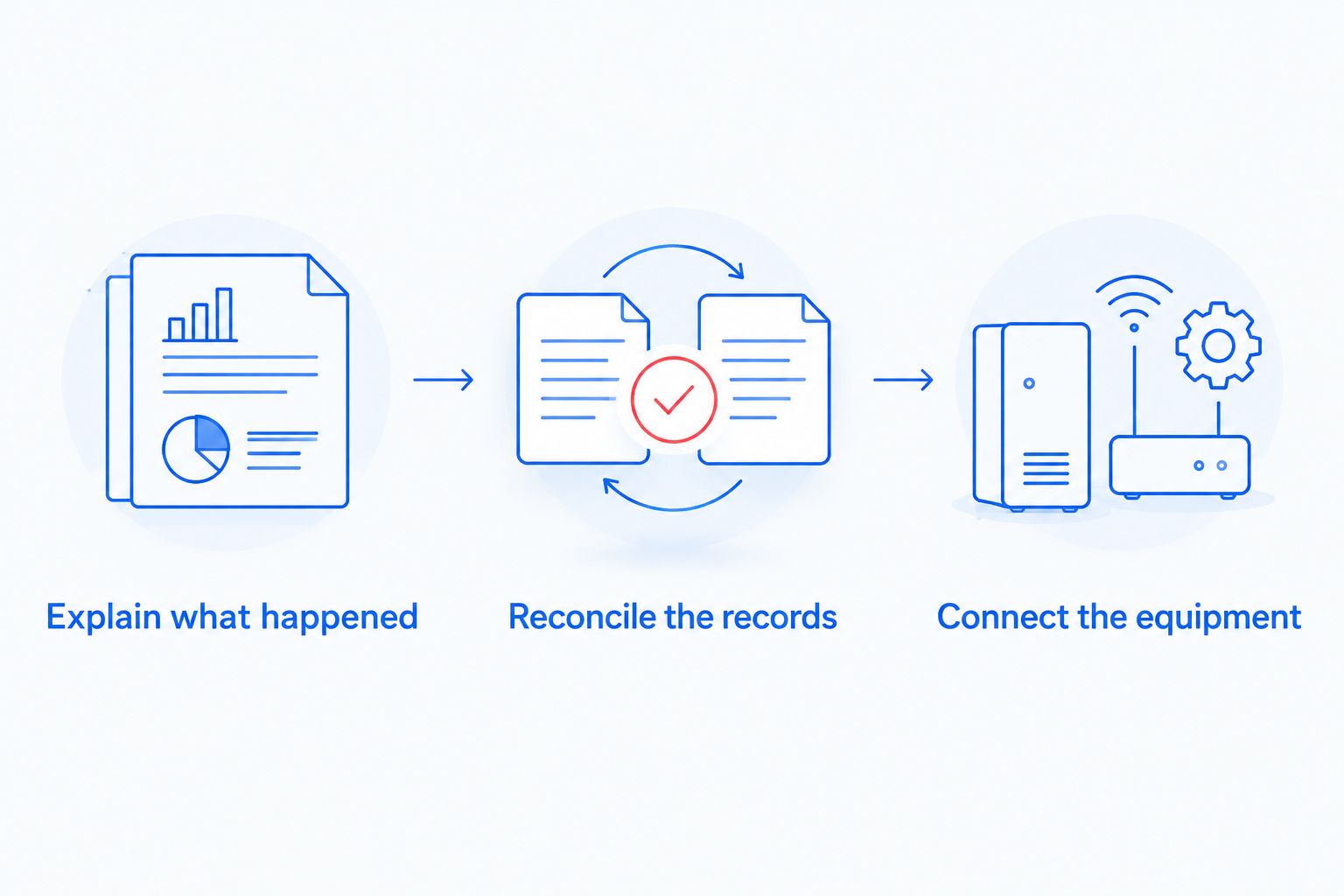
Explain what happened
Describe the credit issue, whether it remains unresolved, and what has changed. Keep the explanation factual and consistent with the documents you submit.
Separate a past disruption from a continuing problem. If the underlying issue still affects operations, explain the current position rather than presenting the problem as finished.
Reconcile the records
Make sure the business name, ownership information, bank records, and financial statements agree. Explain transfers or unusual transactions when requested rather than allowing discrepancies to obscure normal business activity.
Submit the documents the provider requires. Do not assume that a universal document list applies to every equipment financing application.
Connect the equipment to the work
State whether the equipment replaces a failing asset, removes a production bottleneck, or supports an existing business requirement. Use records you already have to support the explanation.
Do not present unconfirmed future sales as contracted revenue. A credible equipment case distinguishes current demand from the growth you hope to achieve.
What should you check before authorizing a credit inquiry?
Ask whether an initial eligibility review involves a soft or hard credit inquiry, whose credit will be checked, and when authorization occurs. Get the answer before submitting permission, not after the application has moved forward.
Also establish whether you are dealing with a lender, broker, or another intermediary. Ask who receives your information and whether the application can be shared with additional financing providers.
For your 2026 funding search, keep a record of applications, authorizations, and responses. This helps you avoid resubmitting the same information without understanding where it goes.
Reject any request to misstate revenue, conceal debt, or alter financial records. A stronger application is accurate and organized, not edited to hide risk.
How do you know whether the equipment is affordable?
Start with cash available after existing business commitments, not gross sales. Then account for the proposed repayment schedule and the cash required to put the equipment into productive use.
An equipment quote and a financing agreement answer different questions. The quote describes the purchase; the agreement establishes the funding obligation. Neither document, by itself, establishes whether the business can afford the complete project.
For a dental practice, evaluating dental chair costs belongs alongside installation, compatibility, and room-readiness planning because financing the chair alone does not establish that the treatment room is ready to operate. The same distinction applies when other businesses purchase machinery that needs supporting work before use.
Test the repayment plan against a slower operating period using your own records. If the obligation only works when every projected sale arrives on schedule, reconsider the purchase before accepting financing.
What should you review before signing in 2026?
Read the agreement as an operating commitment, not just an approval. Equipment that stops working does not automatically suspend the financing obligation.
Review these provisions together:
- Repayment schedule: Identify when payments begin, how they are collected, and whether the schedule matches the written offer.
- Security interest: Determine which assets secure the obligation and what the lender can claim following default.
- Personal guarantee: Understand whether you are personally responsible and what the guarantee covers.
- Insurance and maintenance: Confirm your responsibilities throughout the agreement.
- Early payoff or termination: Ask for the written calculation rather than assuming an early exit reduces the obligation as expected.
- Default and end-of-term terms: Identify what triggers default and what must happen when the agreement ends.
Request clarification before signing anything unclear. For material legal or tax questions, consult a qualified professional who can review the actual documents and your circumstances.
When does funding guidance make sense?
Trifecta Business Group is best for small and mid-sized companies seeking business funding and strategic consulting support. That service scope fits owners who need to connect a funding decision with a broader growth plan.
For equipment financing, the value of consulting is in examining the business decision alongside the funding need. The limit is equally important: consulting support is not a substitute for a provider's underwriting decision or your review of the agreement.
Trifecta Business Group offers funding solutions and consulting services. Discuss your equipment purpose, business finances, and growth plans without treating the conversation as a promise of approval.
Can you get equipment financing without a personal guarantee?
A personal guarantee is not determined by the phrase equipment financing alone. Requirements depend on the provider and agreement, so ask directly whether a guarantee is required and what obligations it covers.
Equipment collateral and a personal guarantee serve different purposes. Do not assume that offering equipment as security removes personal exposure.
Should you wait until your credit improves?
Waiting makes sense when the purchase is discretionary and the current financing obligation would strain operations. Replacing essential equipment presents a different decision, but urgency does not make an unaffordable agreement sustainable.
Compare the consequences of delaying the purchase with the obligations in the proposed agreement. Use documented operating needs rather than pressure to accept an offer before understanding it.
FAQ
Can I get equipment financing with bad personal credit?
Yes, equipment financing with bad personal credit is possible, but approval depends on the provider’s requirements and the complete application. Business finances, existing debt, and the equipment also affect the assessment.
What credit score do I need for equipment financing?
There is no single credit score requirement across all equipment financing providers. Ask each provider about its eligibility criteria before authorizing a credit inquiry.
Is an equipment lease easier to get than an equipment loan?
An equipment lease is not automatically easier to qualify for than an equipment loan. Both arrangements can involve credit review, financial documentation, and personal guarantees.
Can a startup get equipment financing with bad credit?
A startup with bad credit can seek equipment financing, but eligibility depends on the provider and application. Limited operating history gives the provider less business performance evidence to assess.
Can I lose the equipment if I miss payments?
Equipment pledged as collateral can be subject to repossession following default under the agreement. Repossession does not necessarily eliminate any remaining obligation.
Does equipment financing help build business credit?
Equipment financing supports a business credit payment history only when the provider reports relevant account information to business credit reporting agencies. Ask which agencies receive reports and what information is reported.
Can Trifecta Business Group guarantee equipment financing approval?
Consulting or funding support does not guarantee equipment financing approval. Trifecta Business Group offers business funding and consulting services; approval depends on the applicable provider’s review.
One last thing
Before accepting equipment financing with bad credit in 2026, write down what happens if the equipment produces no additional revenue. Identify how the business would make payments, maintain the asset, and meet its existing commitments.
If the repayment plan depends entirely on hoped-for growth, revisit the purchase. The right funding decision supports the business you operate, not only the business you expect to build.
Related guides
- How to prepare your business for a funding application
- How to build business credit for better loan terms
- How to connect Xero to your equipment financing application
Plan Your Equipment Funding Next Step
Discuss your equipment needs and business funding goals.
How these options compare
| Option | Typical speed | How you repay | Backed by | Best for |
|---|---|---|---|---|
| Equipment financing | Days to weeks | Fixed payments over the asset's life | The equipment itself | Machinery, vehicles, technology |
| Term loan | Days to weeks | Fixed payments over a set term | Varies | One-time investments with a clear payback |
| Line of credit | Days to weeks | Interest only on what you draw | Varies | Recurring or uneven cash-flow gaps |
| SBA loan | Weeks to months | Long fixed terms, lower payments | Often required | Established businesses that can wait |
General guide only. Actual speed, cost and terms depend on the lending partner and your file.
Do I need a down payment for equipment financing? +
Not always. Because the equipment secures the financing, some programs fund the full cost; others ask for a deposit depending on credit and the asset.
Can I finance used equipment? +
Often, yes. Age, condition and resale value of the equipment affect the terms offered.
Does applying affect my credit? +
Trifecta Business Group requires no hard credit pull, which does not affect your score. Any hard pull is explained before it happens.
How do I know which funding option fits? +
Start with what the money needs to do, how fast you need it and how you want to repay. Our comparison tool and advisors can help match the program.
Planning your timing
See this month's commercial rate benchmarks before you borrow
Our Small Business Capital & Formation Index tracks the Prime Rate, SBA rate caps, realistic cost ranges by funding type, and new business formation pressure state by state — updated every month.
What are you trying to fund?
Compare flexible working-capital options
Start with working capital and a line of credit, then compare payment structure and speed.
Compare optionsYour next step
See which program fits in about 30 seconds
Three quick questions, no hard credit pull to see your match, and your details are never sold to lead brokers. Commercial financing only — approval is never guaranteed.
Free Trifecta tools
Put this article to work for your business
Keep learning with Trifecta Business Group