
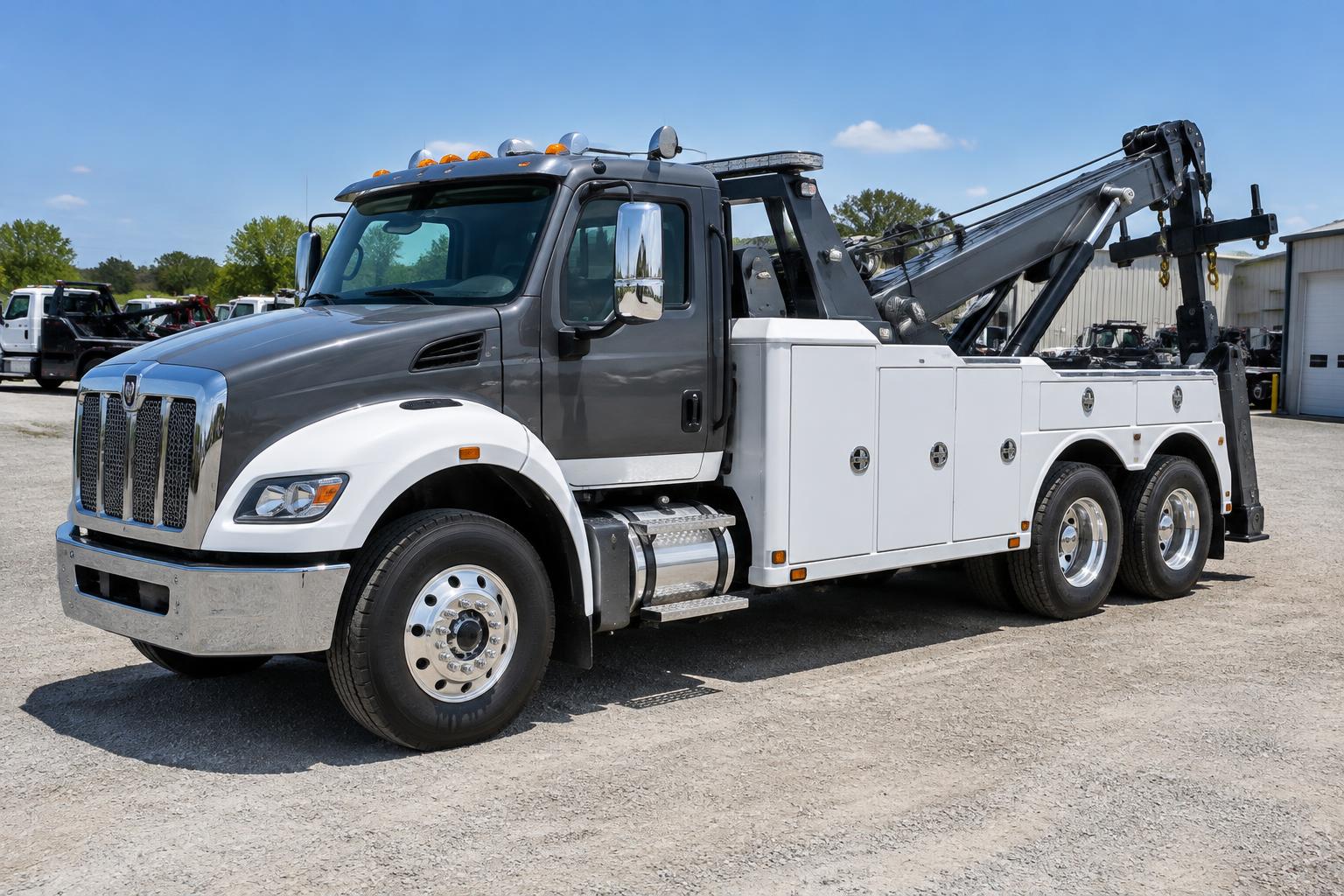
Tow Truck Financing
A wrecker or rollback is a business asset with a purchase price, maintenance needs and an operating role. Replacing a unit and adding capacity are different decisions, even when the equipment looks similar.

 BBB profile &
Chamber member
Trifecta Business Group helps towing operators evaluate commercial equipment financing and the cash flow behind the purchase. One advisor matches the file to one lending desk at a time; the file is never sold or auctioned. There is no hard credit pull to explore your options. Commercial financing only. Approval is never guaranteed, and timing depends on the program and the lender.
01 · Tow Truck FinancingNew and Used Wreckers and Rollbacks
New and used commercial towing equipment may be considered based on the asset and business file. Bring the vendor quote, VIN, mileage, condition and intended use. A rollback, conventional wrecker and heavy recovery unit can have different values and operating costs. Existing modifications, title details and inspection findings may affect review.
Itemize accessories, installation, transport and other costs so the request reflects the complete purchase. Used equipment may need additional valuation or inspection; not every asset or vendor qualifies. Compare financing terms with useful life, maintenance and insurance expenses. Approval is never guaranteed, and timing depends on the program and the lender. A quote is not an authorization to purchase.
The Truck as Collateral
Equipment financing may involve a lien on the commercial vehicle, but the asset alone does not determine approval. Review can also consider business cash flow, ownership, current obligations and any additional security provisions. Confirm exactly which collateral and guarantees are requested instead of assuming the truck is the only obligation.
Read insurance, title, default and repossession terms before accepting. For a lease, compare ownership and end-of-term provisions, including any stated purchase option or return requirement. A tax deduction or accounting treatment should be discussed with your tax advisor, not assumed from the financing label. Disclose existing liens and vehicle loans so the same asset is not presented as unencumbered.
Working Capital Between Calls
Towing businesses may face fuel, insurance, repairs and payroll costs before commercial accounts settle invoices. Working capital has a different purpose from purchasing a truck. Explain whether the gap is seasonal, tied to delayed account payments or caused by a one-time expense. Financing does not fix persistent losses or guarantee more calls.
Build a cash calendar including actual collections, disputed invoices, maintenance and current debt payments. Compare any proposed obligation with a quiet operating period and unexpected downtime. Eligible commercial invoices may require their own review; not every towing bill is suitable for factoring. Your advisor considers the specific business purpose and state restrictions before matching the file to one lending desk at a time.
Financing a Second Heavy Unit
Adding a heavy unit means evaluating demand, operating capacity and the cash needed beyond the purchase price. Include insurance, storage, maintenance and any staffing or licensing costs that apply to your operation. A contract, call history or projected revenue can provide context, but future utilization is not guaranteed.
Use the truck payment estimator to compare an illustrative payment with cash flow after operating expenses and existing obligations. The example rate, amount and term are adjustable planning inputs, not quoted terms. A lower payment from a longer term can increase total interest. Review the full purchase budget and a slower-demand scenario before deciding whether additional capacity is affordable.
Truck Payment Estimator
Example only: adjust the amount, rate and term to compare an illustrative truck payment. Not an offer or quoted financing terms.
Loan Scenario
Adjust the example amount, annual interest rate and term for your truck purchase.
Compare this payment against what the same amount would cost on short-term financing. A longer term lowers the monthly payment but raises total interest — pick the payment your cash flow can carry every month.
Estimate for planning purposes only. Excludes taxes, insurance, and fees. Actual rates and terms are set by the lender in underwriting.
Getting Started
Prepare the equipment quote, VIN and unit details, recent business bank statements and current financing obligations. Include the purpose of the request and any inspection or title information available. Use the application and secure upload rather than emailing sensitive identifiers or bank credentials. Requirements vary with the asset and business file; no minimum business age or deposit level is stated here.
Your advisor explains restrictions and the documents needed for the next review. If a proposal is available, compare total payments, collateral, insurance requirements and end-of-term obligations. There is no hard credit pull to explore your options; any later credit inquiry follows its own authorization process. Approval is never guaranteed, and timing depends on the program and the lender.
Start your commercial financing application
About 3 minutes, plus upload. One advisor, one lending desk at a time; the file is never sold or auctioned. Approval is never guaranteed, and timing depends on the program and the lender.
Or call 1.877.977.3015.
Questions, Answered
Used commercial towing equipment may be considered based on condition, mileage, value, title and business finances. Bring the vendor quote, VIN and intended use. Inspection or valuation may be required. Approval is never guaranteed, and timing depends on the program and the lender.
Do not assume that it is. Equipment agreements can include a vehicle lien and other security or guarantee provisions. Read the proposed collateral, insurance and default terms. Disclose current liens and financing obligations before proceeding so the actual business commitment is understood in context.
No. It models a fully amortized payment using adjustable example inputs. Rates, amounts and terms are not quoted or guaranteed. Compare the example with maintenance, insurance and existing payments, and allow for downtime. Actual financing requires review of the business, asset and proposed agreement.
The requests have different purposes and may require separate review. Disclose current obligations, invoices and cash-flow needs. One advisor matches the file to one lending desk at a time. Compatibility depends on contracts, collateral and cash flow; neither request guarantees the availability of the other.
There is no hard credit pull to explore your options. Any later inquiry requires its own authorization process. The file is never sold or auctioned. Commercial financing only; state and product restrictions apply. Approval is never guaranteed, and timing depends on the program and the lender.