
Business Funding · By Trifecta Business Group
Yes, invoice factoring can hurt customer relationships when customers receive unexpected payment instructions, confusing reminders, or collection messages that conflict with your agreements. The risk comes from how the payment handoff is handled—not simply from selling an invoice—and you can reduce it by explaining the change, reviewing collection practices, and keeping ownership of customer disputes.
- Can invoice factoring hurt customer relationships? Yes—unexpected payment changes and poorly handled collections create avoidable friction.
- Review invoice factoring customer notifications, collection practices, and dispute procedures before signing.
- Keep your account manager involved after a factor takes over payment collection.
- Trifecta Business Group suits small and mid-sized businesses seeking funding solutions alongside strategic consulting.
Can invoice factoring hurt customer relationships?
Invoice factoring becomes a relationship problem when the customer cannot tell whom to pay, whom to trust, or whom to contact. A factor purchasing your receivables introduces another party into a process your customer previously handled with you. That handoff deserves the same care as a change to your billing system.
Use these 3 questions in your 2026 review: Who contacts the customer? Where does payment go? Who resolves an invoice dispute? If the written agreement and the customer-facing process give different answers, resolve the mismatch before submitting invoices.
| Customer-facing approach | Benefit | Relationship risk | Best for |
|---|---|---|---|
| Factoring with customer notification | Makes the payment recipient explicit | An unexplained notice creates confusion | Businesses prepared to explain the payment handoff |
| Non-notification factoring, where offered | Limits visible changes to the customer experience | Confidentiality and contact arrangements depend on the agreement | Businesses that need discretion and can verify the arrangement |
| Keeping receivables collection in-house | Keeps billing communication directly with your team | Your business continues managing collection and the cash-flow gap | Businesses prioritizing direct control over payment follow-up |
These are workflow differences, not guarantees about customer reactions. Ask each provider to show how its actual process works rather than relying on a label.
Why this matters
Your customer experiences payment collection as part of doing business with you. If an outside party sends an inaccurate reminder, your account manager still has a relationship to repair. Transferring an invoice does not transfer your customer's expectations about service.
Trifecta Business Group is best for small and mid-sized companies seeking business funding alongside strategic consulting. Its business funding and consulting services fit that broader planning need; a consulting relationship does not replace reviewing a factor's contract or customer-contact procedures.
For a 2026 funding decision, evaluate the customer handoff alongside the cash-flow benefit. Funding that helps you meet operating needs still needs a workable process for questions, disputes, and payment reconciliation.
Factoring with customer notification: explain the change first
With notification factoring, customers are informed that the receivable has been assigned and receive instructions about payment. The practical benefit is clarity: the customer knows which payment instructions apply. The downside is introducing a change that your customer's accounts-payable team must understand and process.
Best for: businesses ready to coordinate a transparent payment transition. Give the customer advance context consistent with the factor's required notice. Identify the affected invoices, explain where payment goes, and distinguish payment questions from product or service questions.
Do not promise that nothing changes if payment instructions do change. Instead, state precisely what stays with your team and what moves to the factor. Confirm the customer has received the instructions through its normal accounts-payable process.
Non-notification factoring: verify what stays confidential
Non-notification factoring is structured to limit disclosure of the factoring arrangement to customers, but the exact servicing and payment setup depends on the contract. The label alone does not establish who communicates with customers or what happens after nonpayment.
Best for: businesses that need discretion and can confirm the arrangement in writing. Ask who appears on correspondence, how payments are directed, and which circumstances permit direct customer contact. Review any confidentiality exceptions before treating discretion as a deciding benefit.
The advantage is limiting visible disruption. The drawback is that less visible change does not remove your responsibility to understand the payment process. Do not tell a customer the arrangement will remain confidential unless the agreement supports that statement.
Why the relationship risk varies
Customer impact depends on the operating details of the arrangement. Use these factors as a provider-review checklist, not as a prediction of how a particular customer will respond.
- Notice quality: Does the customer receive a clear explanation before unfamiliar payment instructions arrive?
- Collection conduct: Who sends reminders, what language do they use, and how are errors corrected?
- Invoice accuracy: Are purchase orders, delivery records, credits, and payment terms consistent before submission?
- Dispute ownership: Does a customer with a service complaint reach someone authorized to resolve it?
- Payment coordination: Can your team and the factor identify payments, credits, and misdirected funds without contradictory messages?
- Customer requirements: Does the process respect the customer's approved billing contacts, vendor procedures, and contractual requirements?
Do not approve a process you cannot explain to your customer. A funding agreement can be acceptable on paper while its collection workflow conflicts with how your accounts actually operate.
How do you protect customer relationships before factoring?
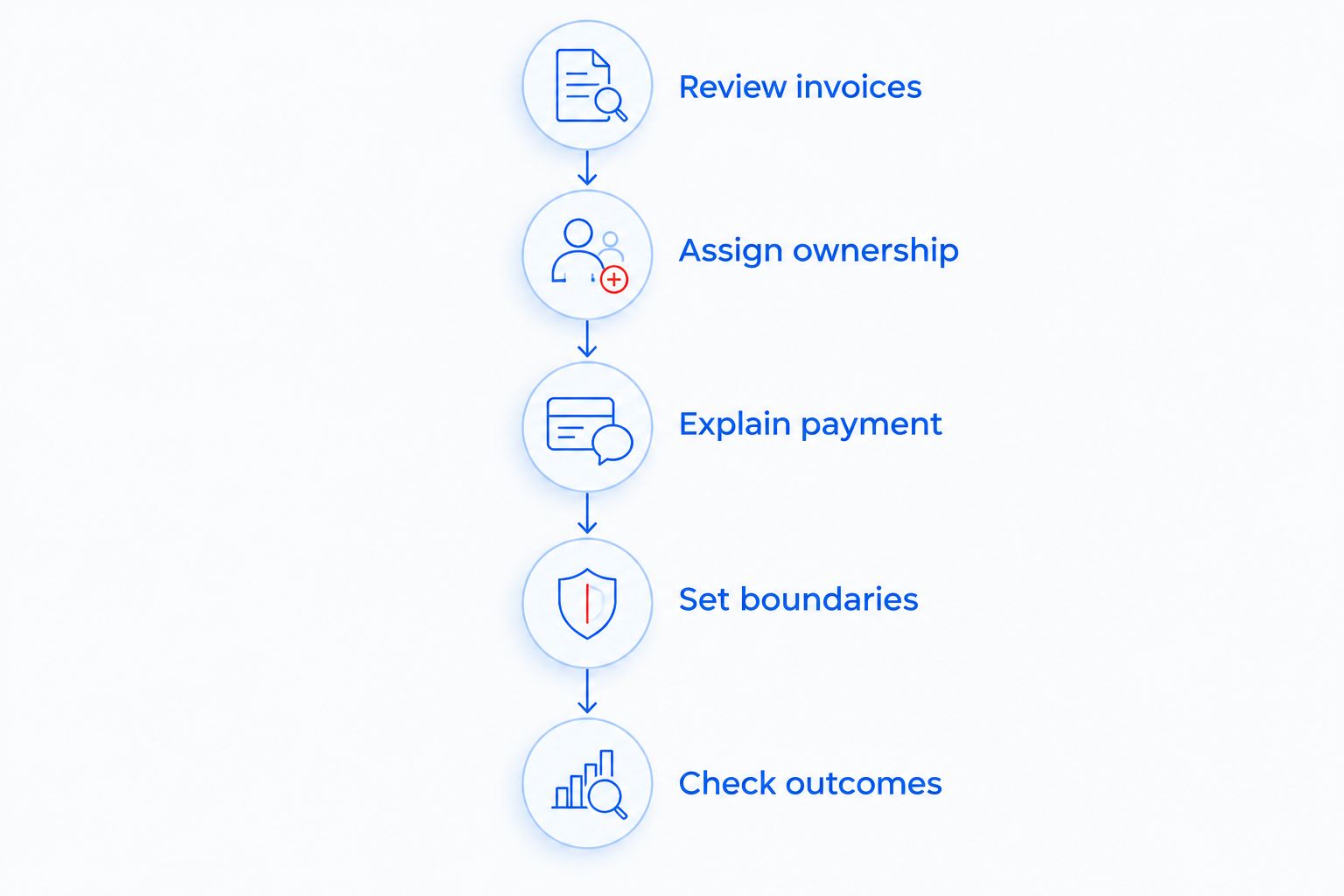
Build the customer-contact process before you submit invoices. The following sequence turns a general promise of professional service into specific responsibilities you can review in 2026.
1. Review invoices
Check that the invoice reflects the agreed work, payment terms, and customer details. Match supporting records to the invoice, and identify unresolved credits or complaints before presenting it for funding.
An unresolved service dispute needs an operational answer, not another payment reminder. Ask the factor how disputed invoices are handled and what obligations remain with your business.
2. Assign ownership
Name 1 internal owner for the factoring relationship. Keep 2 named contacts available to the customer: a payment contact and a service contact, even if your business assigns both roles to the same person.
The point is accountability, not extra layers. Your customer should not have to repeat a billing problem to several people before someone accepts responsibility for resolving it.
3. Explain payment
Coordinate the introduction with the factor's required notification process. Tell the customer's accounts-payable team which invoices are affected, where verified payment instructions come from, and how to ask questions.
Payment-detail changes deserve independent verification through an established contact method. Do not ask customers to trust an unfamiliar email simply because it includes your business name.
4. Set boundaries
Review sample reminders and escalation messages before signing. Ask how the factor handles a customer who says an invoice was already paid, a promised credit has not appeared, or the underlying work is disputed.
Clarify which communications your team receives and how you request a correction. Do not assume you can stop collection activity unless the agreement gives you that right.
5. Check outcomes
After the handoff, review customer questions, misdirected payments, unresolved credits, and contradictory reminders. Discuss actual incidents with the factor and document the agreed correction.
Treat a complaint as a process issue to investigate. A customer who dislikes confusing instructions needs a clearer process, not reassurance that factoring is common.
What should you ask a factoring company before signing?
Ask for documents and examples, not just assurances. For your 2026 provider review, request the customer notice, sample collection messages, payment instructions, dispute procedure, and relevant contract provisions. Read them together to check whether the sales explanation matches the agreement.
Use these questions in the conversation:
- Who contacts customers before an invoice is due and after it becomes overdue?
- Can your business review the initial customer notice?
- What happens when the customer disputes the work rather than the payment instructions?
- How are credits, partial payments, and payments sent to the wrong recipient handled?
- When can the factor contact a customer directly under a non-notification arrangement?
- What happens to customer payment instructions when the factoring relationship ends?
The invoice factoring companies for small business guide is a relevant starting point for provider research. Keep the customer-contact checklist beside any proposal so that funding terms do not crowd out operational questions.
Reject a proposal that leaves essential responsibilities unclear. If contractual language is difficult to interpret, have a qualified attorney review the assignment, collection, confidentiality, and termination provisions before you commit.
Do customers think factoring means your business is struggling?
Factoring alone does not establish that a business is struggling. It is a way to turn receivables into working capital, but you cannot control every customer's interpretation of a payment change.
Answer the operational question directly: what changes for this customer? Explain the payment process accurately without making claims about your financial condition that you cannot support. Your customer needs reliable instructions, not a lengthy defense of your funding decision.
Keep account managers aligned with the explanation. Conflicting answers from sales and finance create a separate credibility problem, regardless of the funding arrangement itself.
Can a factoring company change your customer's payment terms?
Assigning an invoice is not, by itself, an agreement by the customer to different commercial payment terms. Separate the instruction about whom to pay from the underlying agreement about when payment is due and what the customer owes.
Give the factor the correct contract and invoice information. If a reminder conflicts with agreed terms, raise the discrepancy promptly and request a correction through the established process. Have counsel review any uncertainty about assignment rights or customer obligations.
Can you keep control of customer service after factoring?
You can retain responsibility for customer service while a factor handles assigned receivables, but collection authority depends on the agreement. Define the boundary between payment administration and complaints about delivery, quality, or performance.
Keep a named account owner involved in service disputes. That person should coordinate with the payment contact so the customer receives consistent answers. Selling a receivable does not solve the underlying reason a customer disputes an invoice.
FAQ
Can invoice factoring hurt customer relationships even if customers pay on time?
Yes, invoice factoring can create friction even when customers pay on time if payment instructions are unclear or reminders are inaccurate. Confirm the handoff and reconcile payments before customers receive conflicting messages.
Will my customers know I use invoice factoring?
Customers receive notice under notification factoring; disclosure under a non-notification arrangement depends on its structure and contract. Verify who can contact customers and what events permit disclosure before promising confidentiality.
Does invoice factoring mean a collection agency will contact my customers?
Invoice factoring does not automatically mean a collection agency will contact your customers. Ask who administers payments, who sends overdue reminders, and whether another party can become involved under the agreement.
What’s the best way to tell customers about factoring?
Explain the payment change clearly and coordinate your message with the factor’s required notice. Identify affected invoices, verified payment instructions, and separate contacts for payment and service questions.
Can I stop a factor from contacting an important customer?
Your ability to restrict customer contact depends on the factoring agreement. Negotiate any essential communication boundaries before signing rather than relying on a verbal understanding.
Is non-recourse factoring better for customer relationships?
Non-recourse factoring does not establish how customers will be treated. It addresses specified nonpayment risks under the contract, while customer relationships depend on communication, collection conduct, and dispute handling.
What should I review before choosing invoice factoring in 2026?
For a 2026 factoring decision, review customer notices, collection practices, payment routing, dispute procedures, and termination requirements. Compare those details with your customer contracts and internal billing responsibilities.
One last thing
The end of a factoring arrangement needs a customer handoff too. Before signing, ask how customers receive replacement payment instructions, who confirms outstanding balances, and how payments arriving during the transition are handled. The exit process belongs in your 2026 review, not in a future cleanup project.
Trifecta Business Group offers funding solutions and strategic consulting for small and mid-sized companies. Keep that broader business plan separate from provider promises: the right decision must fit both your cash-flow needs and the customer relationships you intend to keep.
Related guides
- Accounts receivable financing for B2B companies
- Is invoice factoring bad for your business credit?
- How to choose the right funding option for business growth
Want to explore commercial financing options? Start a private application. There is no hard credit pull to explore your options. One advisor will review your situation and match your file with one lending partner at a time. Approval is never guaranteed, and timing depends on the program and the lender.
Plan your next funding step
Connect your funding needs with your business growth plan.
How these options compare
| Option | Typical speed | How you repay | Backed by | Best for |
|---|---|---|---|---|
| Invoice factoring | Often days | Customer pays the invoice; fee deducted | Your B2B invoices | Slow-paying business customers |
| Line of credit | Days to weeks | Interest only on what you draw | Varies | Recurring or uneven cash-flow gaps |
| Merchant cash advance | Often days | Share of daily/weekly sales; priced with a factor rate | Future sales | Urgent needs, card-heavy businesses |
| Term loan | Days to weeks | Fixed payments over a set term | Varies | One-time investments with a clear payback |
General guide only. Actual speed, cost and terms depend on the lending partner and your file.
How is invoice factoring different from a loan? +
Factoring advances cash against invoices you have already issued to business customers. Your customers' payment history matters as much as your own credit.
What does factoring cost? +
Costs are typically a percentage of the invoice that depends on how long your customer takes to pay. Ask for the full fee schedule before signing.
Does applying affect my credit? +
Trifecta Business Group requires no hard credit pull, which does not affect your score. Any hard pull is explained before it happens.
How do I know which funding option fits? +
Start with what the money needs to do, how fast you need it and how you want to repay. Our comparison tool and advisors can help match the program.
Planning your timing
See this month's commercial rate benchmarks before you borrow
Our Small Business Capital & Formation Index tracks the Prime Rate, SBA rate caps, realistic cost ranges by funding type, and new business formation pressure state by state — updated every month.
What are you trying to fund?
Compare flexible working-capital options
Start with working capital and a line of credit, then compare payment structure and speed.
Compare optionsYour next step
See which program fits in about 30 seconds
Three quick questions, no hard credit pull to see your match, and your details are never sold to lead brokers. Commercial financing only — approval is never guaranteed.
Free Trifecta tools
Put this article to work for your business
Keep learning with Trifecta Business Group